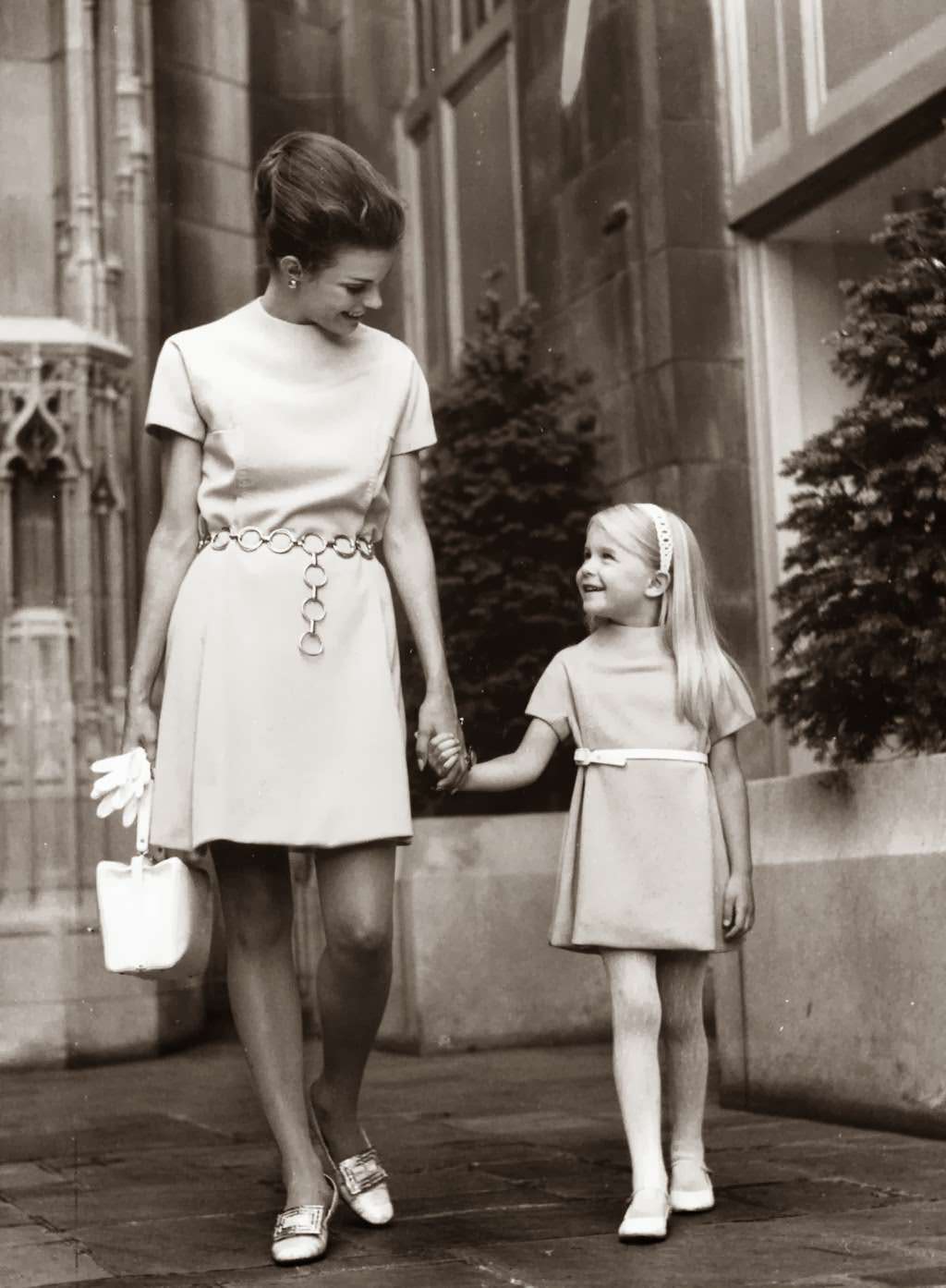
A mother and daughter stroll hand in hand along a city sidewalk, turning everyday architecture into a runway for late-1960s style. Their matching, clean-lined shift dresses fall above the knee, a silhouette that helped define the era’s youth-driven fashion mood. The scene feels poised yet playful, with the child’s delighted glance echoing the easy confidence of the moment.
Notice how the mother’s look is sharpened by a bold chain belt worn at the natural waist, a deliberate choice that sidesteps the empire line mentioned in the Chicago Tribune caption. Her accessories—structured handbag, gloves, and low-heeled shoes—add polish without distracting from the dress’s simple geometry. The daughter’s version mirrors the same pared-back cut, cinched with a slim belt that keeps the outfit neat and unmistakably coordinated.
Earl Gustie’s 1968 note about pattern numbers and waist emphasis points to a broader story: fashion as something families could sew, adapt, and personalize at home while keeping pace with modern trends. The miniskirt-length hem, the minimalist tailoring, and the mother-daughter “twin” styling all speak to a time when ready-to-wear looks and paper patterns shaped what people saw on the street. For readers interested in 1960s fashion history, vintage sewing patterns, and the cultural rise of the miniskirt, this photograph offers a crisp window into how style traveled from the newspaper page to real life.