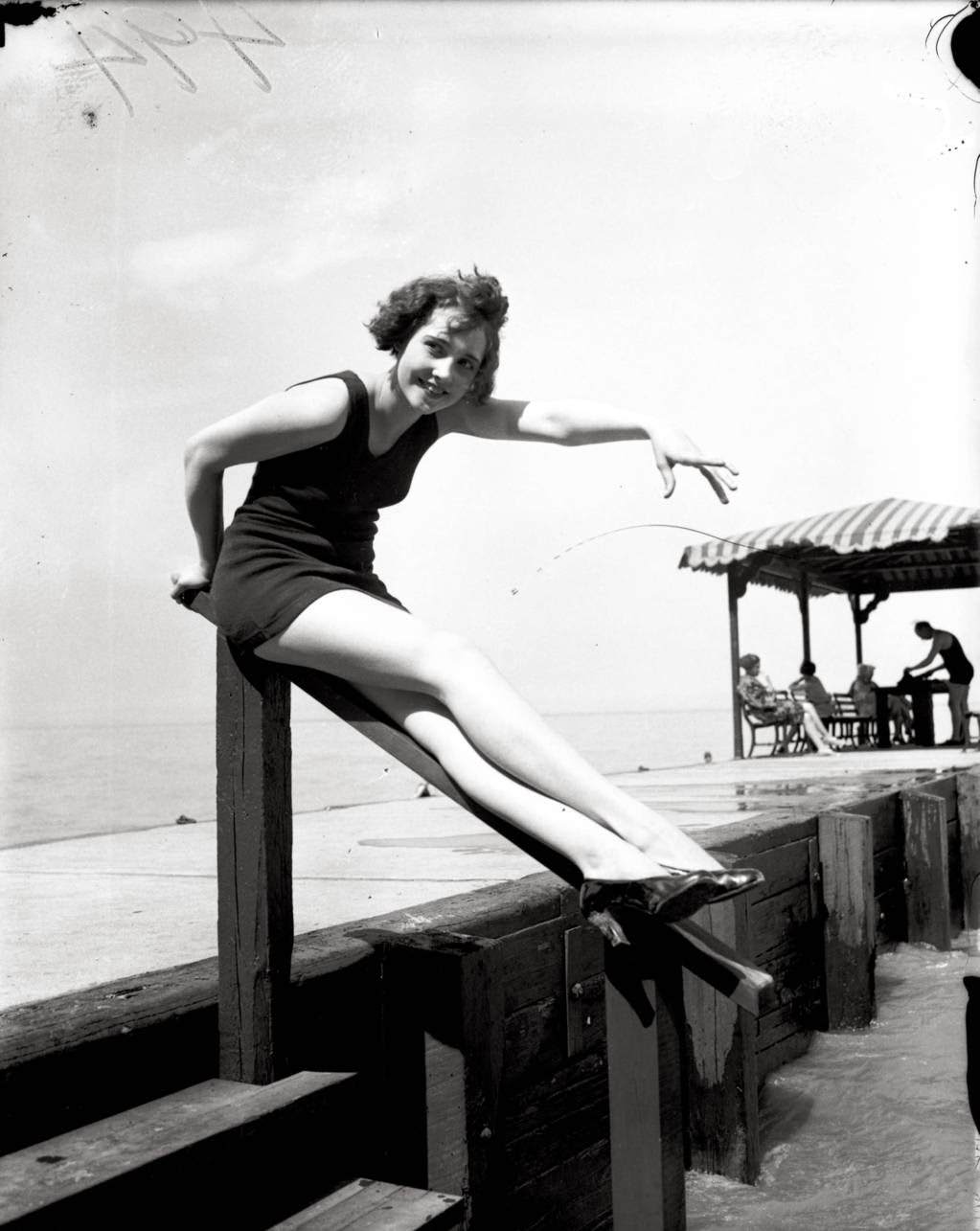
Perched along a wooden seaside barrier, Myrtle Christine Valsted leans into the camera with the easy confidence of the Jazz Age, her bobbed hair tousled by the lake breeze and her dark, streamlined swimsuit reading as modern, athletic, and unmistakably 1920s. The open sky and bright water flatten into a luminous backdrop, while her relaxed pose—one arm draped outward, legs extended—turns a simple shoreline moment into a piece of flapper-era performance.
Behind her, a striped canopy shelters a small group in deck chairs, a quiet reminder that beauty contests and beach culture shared the same stage in the Roaring Twenties. The scene evokes the world that produced “Miss Chicago 1927,” when city pageants fed headlines, fashion trends, and a growing appetite for celebrity, even as rules and scandals could reshuffle winners overnight. Valsted’s rise—reportedly after the original winner was found to be married—speaks to how tightly propriety and publicity were intertwined.
From Chicago acclaim to the Atlantic City pageant and a move toward Hollywood, Valsted’s story carries the hopeful momentum of an era that promised new starts to young women willing to step into the spotlight. Yet the title’s final turn—her death one year later following surgery for appendicitis—casts a sobering shadow over the bright, sunlit image. Taken together, the photograph and its context offer a poignant window into 1920s fashion and culture, and into the fragile, fast-moving machinery of American fame.