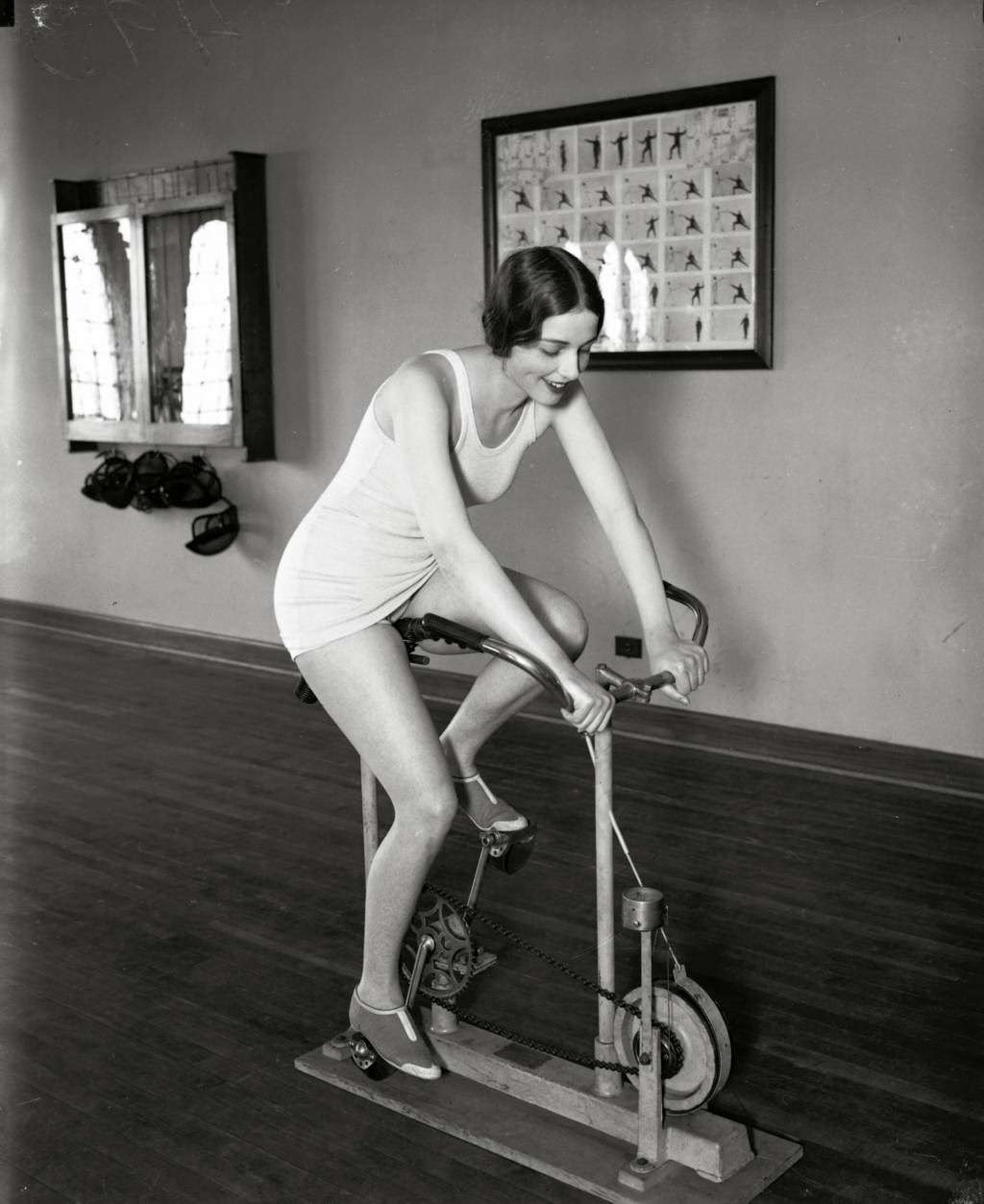
Lean and smiling in a sleeveless athletic outfit, Miss Universe Ella Van Hueson is pictured in 1928 astride a stationary exercise bicycle, hands firm on the curved handlebars as if mid-ride. The pared-back studio room—wood floor, a simple window, and a framed wall chart of small movement poses—adds to the sense that this is as much about modern habits as it is about glamour. Her short, neatly waved hairstyle and practical shoes place the scene squarely in the late-1920s moment when the “new woman” was marketed as energetic, streamlined, and visibly in motion.
Beauty culture in the 1920s was increasingly intertwined with fitness, posture training, and the promise of health, and this photograph makes that connection explicit. Rather than an evening gown or pageant sash, the focus shifts to everyday discipline: exercise equipment, controlled form, and a youthful ease that reads like an advertisement for vitality. It’s a revealing glimpse of how contests and celebrity portraits helped normalize emerging ideas about women’s athletics, body ideals, and modern leisure.
Chicago’s flapper-era fascination with style and independence sits in the background of this post, but the image also speaks to a broader shift across popular culture. Photographs like this one helped define what “fashion & culture” meant in the Jazz Age—where bobbed hair, sporty silhouettes, and the aura of self-improvement became aspirational. For readers searching Miss Universe 1928, Ella Van Hueson, or 1920s women’s fashion and fitness, this snapshot offers a vivid reminder that modernity often arrived on quiet wheels in ordinary rooms.