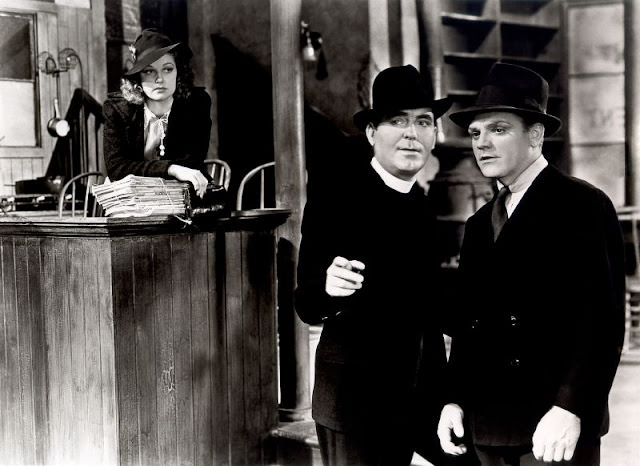
Ann Sheridan appears here in a poised, watchful moment from *Angels with Dirty Faces* (1938), leaning over a wooden counter as the room’s tension gathers in front of her. The set dressing—stacks of papers, heavy timber, and shadowy back walls—evokes the workaday interiors so common to classic Hollywood crime dramas, where information and influence can change hands as quickly as a glance. Her tailored hat and sharp styling underline the era’s unmistakable studio polish, even when the story lives close to danger.
In the foreground, two men in dark suits and brimmed hats command the frame, their expressions set somewhere between confidence and concern. Their placement creates a layered composition that pulls the viewer from the crisp silhouette of their coats to Sheridan’s steady gaze behind them, suggesting a conversation already in motion. Details like the crisp collars, structured jackets, and the subtle gleam of studio lighting showcase the visual language of late-1930s movies—clean lines, dramatic contrast, and faces designed to read from the back row.
For fans of Ann Sheridan and golden-age Movies & TV, photos like this function as more than memorabilia; they’re small windows into how Warner-era storytelling looked and felt. The image balances glamour with grit, highlighting the genre’s mix of fast talk, moral pressure, and looming consequence. Whether you’re collecting classic film stills or revisiting *Angels with Dirty Faces*, this snapshot offers a vivid reminder of why 1930s cinema remains so endlessly searchable, shareable, and rewatchable today.