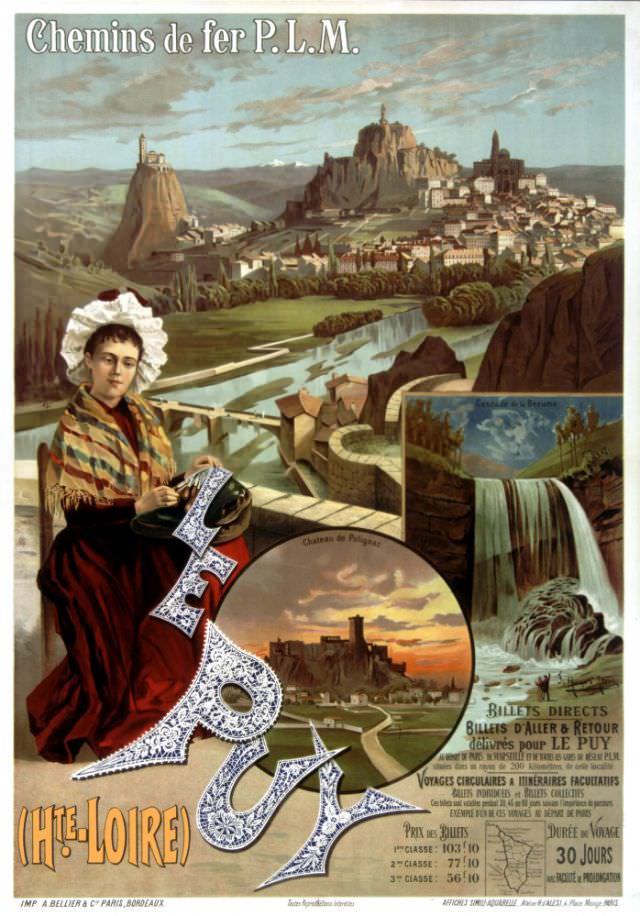
Bold lettering for “Chemins de fer P.L.M.” crowns a lavish late-19th-century travel poster that invites the viewer to Le Puy in Haute-Loire, rendered as a dramatic hill town rising from a green basin. Volcanic-looking rock formations dominate the skyline, topped by sanctuaries and stonework that signal both pilgrimage heritage and regional pride. In the foreground, a seated woman in traditional dress anchors the scene, turning the destination into something personal and inviting rather than merely scenic.
Across the composition, the artist layers postcard-like vignettes—panoramic views, a circular sunset scene, and a rushing waterfall—to suggest variety within easy reach of the rail line. Bridges, terraced streets, and clustered roofs guide the eye through the valley, while the surrounding uplands fade into a broad horizon, promising fresh air and picturesque excursions. The palette and careful detailing reflect the era’s promotional style: part documentary, part dream, designed to make the countryside feel both accessible and enchanting.
As cover art, this “PLM railway” advertisement is also a snapshot of tourism in the 1890s, when French rail companies sold destinations through romance, regional costume, and heroic landscapes. The lower text blocks about tickets and routes (including direct and return fares) reinforce that the poster’s beauty had a practical purpose—turning admiration into a journey. For collectors of vintage French travel posters, Le Puy-en-Velay imagery, or railroad ephemera, it offers a striking example of how the Chemins de fer P.L.M. marketed modern mobility with a deep sense of place.