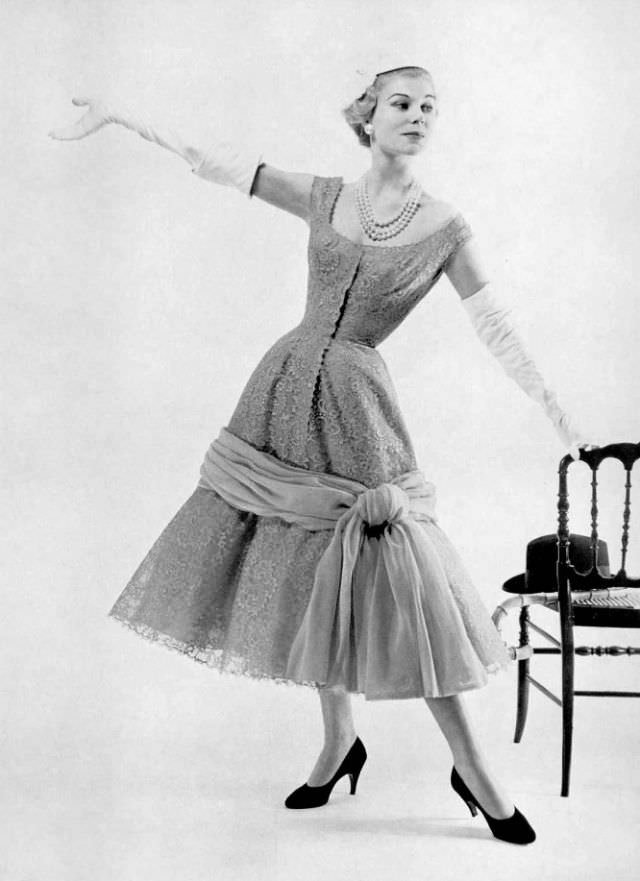
Poised mid-gesture, Stella turns the studio space into a stage, one arm extended as if guiding an unseen partner through a dance. The 1955 lace cocktail dress credited to Jacques Fath balances structure and softness: a fitted bodice with a neat neckline flows into a full, knee-skimming skirt, its texture catching the light in a subtle pattern. Long opera gloves, a strand of pearls, and classic pumps complete the polished silhouette associated with mid-century fashion photography and couture styling.
What stands out is the confidence of the pose—elegant but playful—suggesting movement rather than a static display of clothing. A wide sash tied into a dramatic bow at the hip adds theatrical volume and emphasizes the waist, while the lace overlay keeps the look refined and formal. With her hair swept back in a smooth, period-typical finish, Stella embodies the ideal of 1950s cocktail dressing: feminine, precise, and ready for an evening out.
In the broader story of fashion and culture, images like this helped define how American audiences imagined Paris couture and the social rituals surrounding it. The spare background and the single chair at the edge of the frame keep attention on line, fabric, and attitude—key ingredients for SEO searches around “1955 cocktail dress,” “Jacques Fath lace dress,” and “1950s couture modeling.” Stella’s presentation captures a moment when postwar glamour favored impeccable tailoring and a sense of effortless celebration, even under the bright clarity of a studio lens.