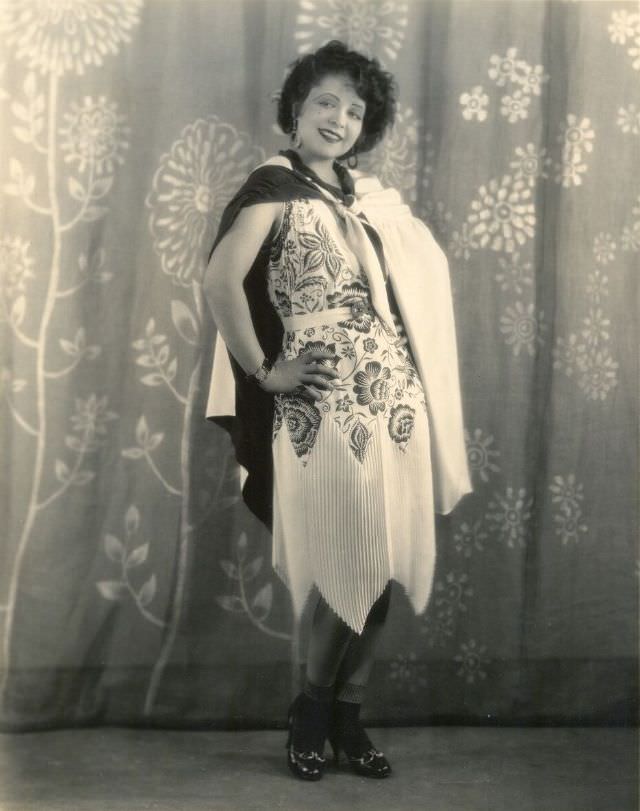
A poised young woman stands before a softly patterned studio backdrop, hand on hip and chin tipped with the kind of confidence silent-era audiences loved. Her outfit—an embroidered, floral motif dress with crisp pleats and a cape-like wrap—leans into late-1920s glamour, where texture and silhouette did as much storytelling as any title card. Even without sound, the pose speaks volumes: polished, playful, and ready for the spotlight.
Tied to the title “The Fleet’s In,” this image evokes the romantic sheen often associated with 1928 cinema and the transition years at the close of the silent film period. Studio portraiture like this was part publicity, part fantasy—carefully lit, carefully staged, and designed to sell a mood as much as a movie. The decorative curtain behind her adds a theatrical flourish, reinforcing how film stills and promotional photos blurred the line between stagecraft and everyday life.
For collectors and classic Movies & TV fans, photographs from films like this offer a direct line to the style language of silent films: bold fashion, expressive body language, and a distinctly modern attitude. Look closely at the details—the drape of the wrap, the ornate patterning, the glint of jewelry—and you can almost sense how wardrobe and set design carried emotion when dialogue couldn’t. It’s a small window into why 1920s film glamour still captivates, frame after frame.