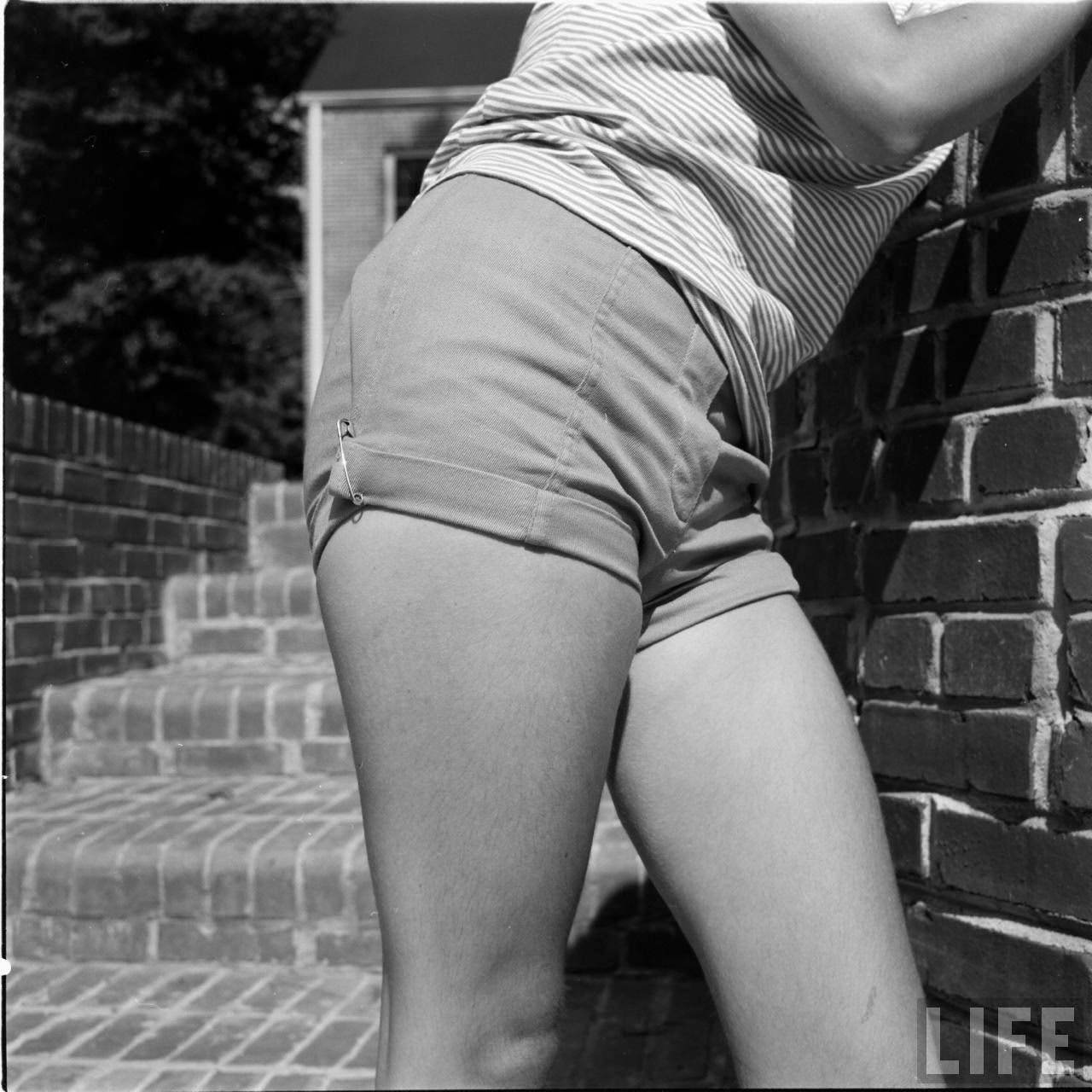
Shot from a low angle on a brick stairway, the frame zeroes in on the defining lines of mid-century casualwear: high-waisted short shorts with crisp cuffs, paired with a sleeveless striped top. The fit is tailored and structured rather than beachy or loose, a reminder that even “play clothes” in 1950s America often borrowed the discipline of smarter dress. A tiny fastener at the side seam and the clean waistband make the garment’s construction part of the story, not just its hemline.
In the decade’s fashion culture, raising the waist while shrinking the leg was a quiet provocation—an everyday way to redraw the silhouette without abandoning polish. These shorts sit high on the torso, emphasizing a cinched midsection and a long, athletic line, suggesting a growing comfort with sport, sun, and movement in public life. The setting feels domestic and ordinary, which only heightens the point: rebellion can look like simply walking outside in something new.
For readers interested in 1950s American fashion history, the photo offers a vivid entry into the era’s tensions between modesty and modernity, conformity and self-expression. High-waisted short shorts would later be reinterpreted again and again, but here they appear in an early, confident form—practical, flirtatious, and unmistakably of their time. It’s a small garment with an outsized cultural footprint, bridging postwar neatness and the freer style revolutions to come.