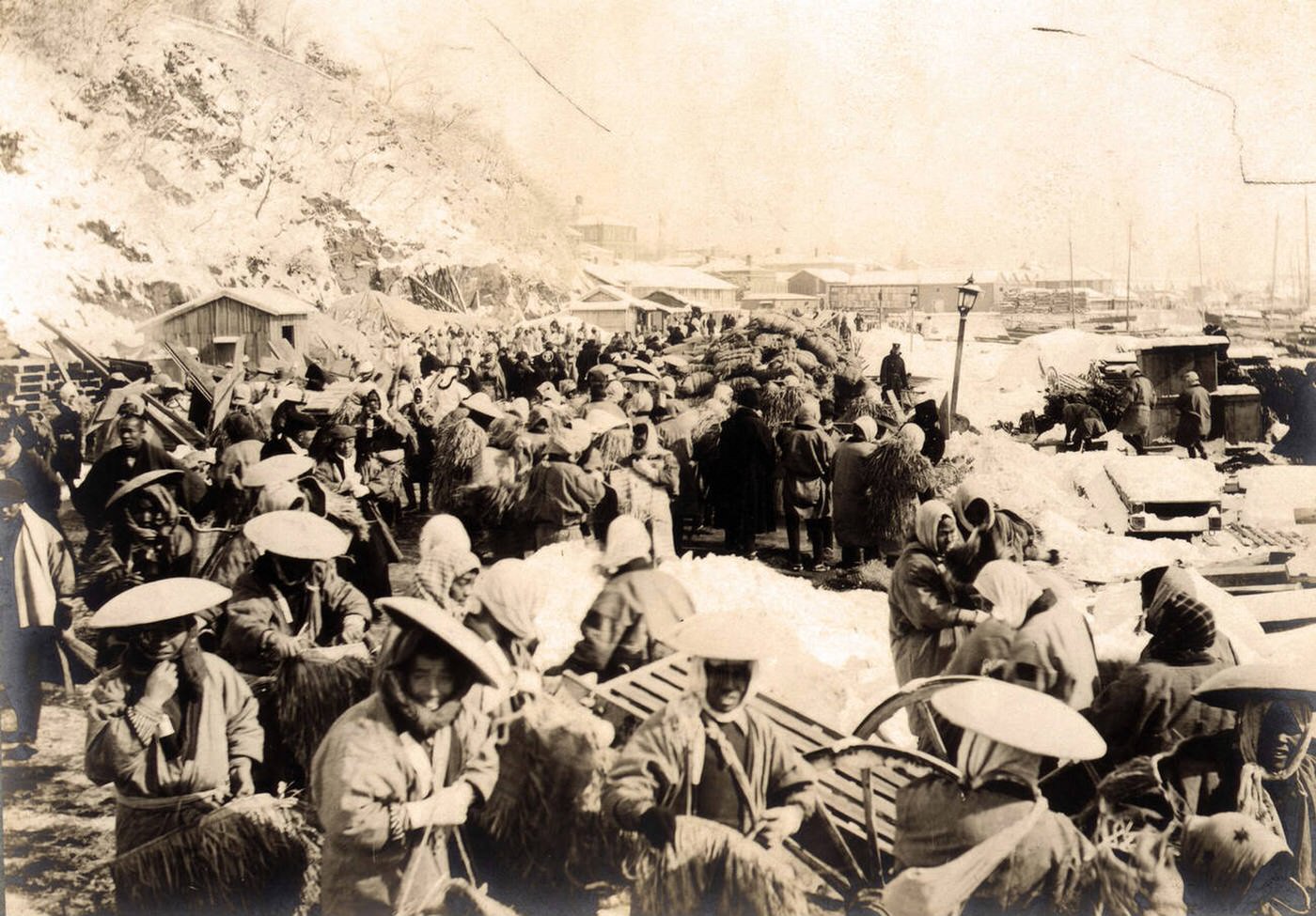
Crowds press along the wharf at Chemulpo as laborers shoulder heavy bundles and sacks, turning the waterfront into a moving conveyor of men and material. Winter light and haze wash over a busy shoreline dotted with low sheds and stacked cargo, while the sea and moored vessels sit just beyond the crush of activity. Straw rain capes, wide-brimmed hats, and layered work clothes hint at cold weather and the sheer physical demands of unloading supplies by hand.
In 1904, ports like Chemulpo became vital arteries for military logistics, and the title’s mention of Japanese and Korean coolies points to the multinational, unequal labor systems that powered wartime transport. The scene reads like a snapshot of supply-chain urgency before mechanized handling—bales, crates, and provisions transferred from ship to shore through human effort and coordination. Even without visible combat, the photograph speaks to the infrastructure of conflict: docks, storage, and the relentless movement of necessities that keep armies fed and equipped.
Look closely and the story becomes as much about people as it is about war: workers bent under loads, lines of figures threading between piles of goods, and supervisors standing amid the flow. Chemulpo’s waterfront appears both improvised and organized, a temporary workplace shaped by global pressures and local geography. For readers exploring Korea in 1904, wartime ports, or the history of labor in East Asia, this image offers a grounded, unvarnished view of the work that made military campaigns possible.