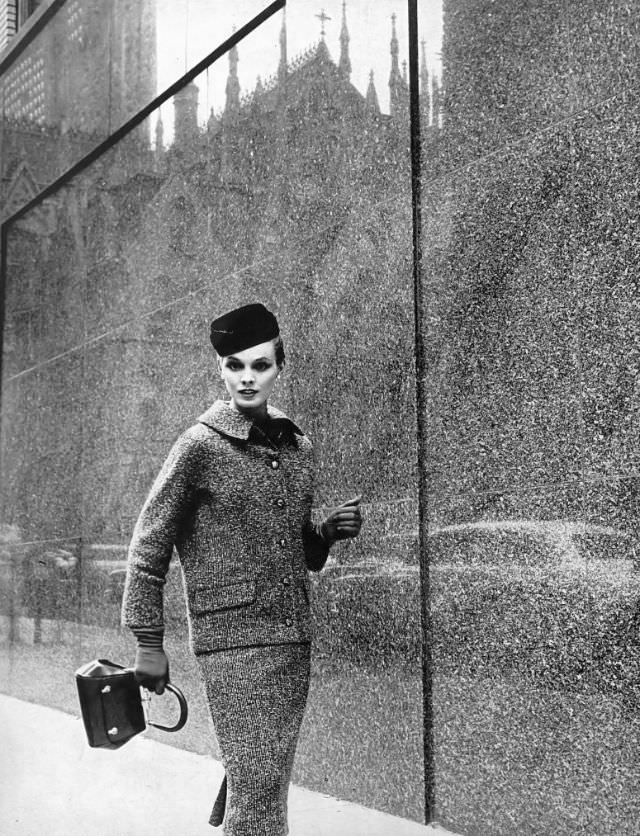
Poised against a rain-speckled wall of glass and polished stone, Linda Harper steps through the urban frame with the composure of mid-century fashion modeling. Her black-and-sepia tweed suit reads as both practical and refined, its texture emphasized by the camera’s crisp contrast, while the white collar brightens the neckline and draws the eye to her composed expression. A small dark hat sits neatly above carefully styled hair, completing a silhouette associated with 1950s elegance and disciplined tailoring.
Ben Zuckerman’s photograph turns the city itself into a runway, using reflective surfaces and faint architectural shapes to suggest movement beyond the model’s stillness. The angled lines of the building façade and the sheen of wet pavement create depth, while Harper’s handbag and gloved hand add the everyday details that made editorial fashion feel attainable. In the background, blurred vehicles and softened outlines hint at modern life continuing just out of focus, a subtle contrast to the immaculate outfit in the foreground.
Fashion and culture intertwine here in the way the suit communicates confidence, respectability, and a polished public identity—hallmarks of 1950s style. The tweed’s dense weave and the suit’s structured fit speak to a period when craftsmanship and clean lines carried social meaning as much as aesthetic appeal. Seen today, the image remains a vivid document of vintage womenswear, showcasing how a single ensemble—tweed, white collar, hat, and handbag—could project sophistication on a city street.