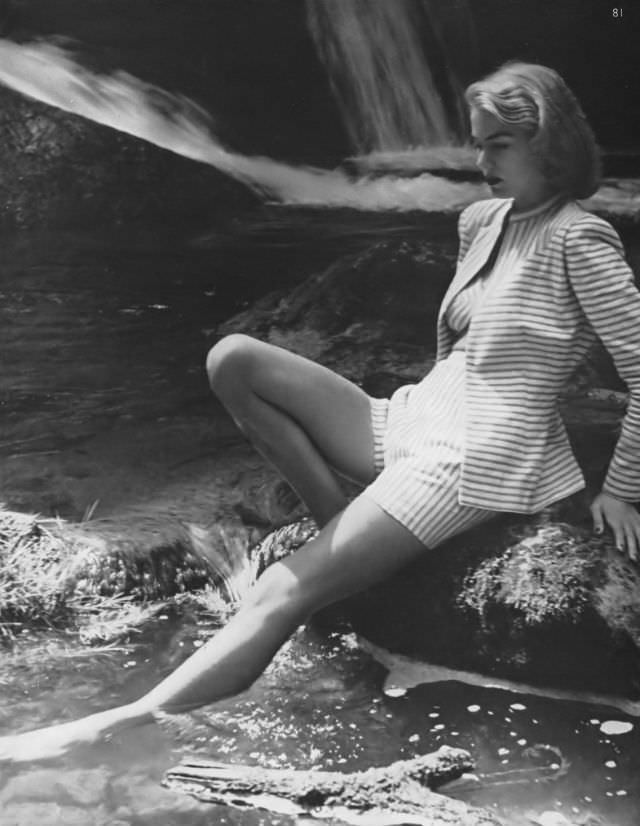
Against a rushing waterfall and dark, slick rocks, a Vogue model reclines at the water’s edge, one leg stretched into the stream as spray blurs into a soft, misty backdrop. The photographer frames her in a calm, sculptural pose that contrasts with the movement of the water, letting light skim across her skin and the surrounding stones. The scene has the relaxed intimacy of an outdoor summer interlude, while still maintaining the poised composure of mid-century editorial fashion.
Her outfit—a white Mexican cotton sun-suit designed by Tina Leser—reads as both practical and refined, with crisp lines that suit an active, sunlit setting. Striped detailing (noted in the title as green pencil accents, rendered here in tonal bands) runs across the jacket and matching shorts, emphasizing the garment’s structure and elongating the figure. The broad shoulders, cinched waist, and tailored shorts embody 1940s sportswear’s blend of utility and elegance, a look built for modern leisure as much as for the page.
Fashion and culture meet in this 1945 styling, where traditional textile inspiration is translated into a contemporary silhouette for an American magazine audience. Leser’s design suggests a broader wartime-era interest in regional craft and “resort” narratives—clothing that could evoke travel, sunlight, and escape even when far from the runway. Set in nature rather than a studio, the editorial becomes a piece of fashion history: an image of postwar optimism, outdoor glamour, and the enduring power of simple cotton transformed by thoughtful design.