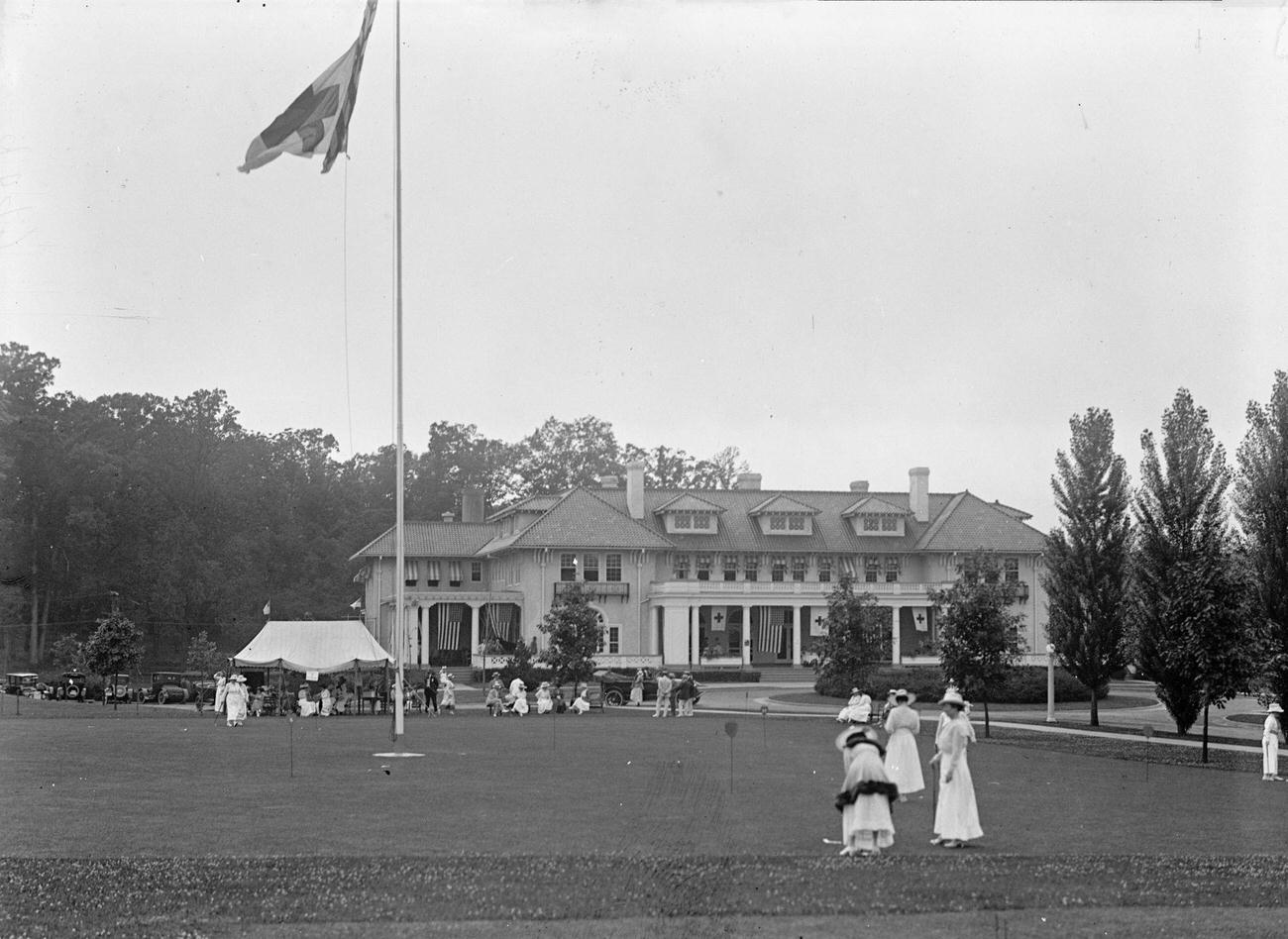
A broad clubhouse anchors the scene at Columbia Country Club in 1917, with a tall flagpole rising from the green and small groups scattered across the lawn. Women in long, light-colored dresses and wide-brimmed hats cluster near putting areas, their golf clubs held with an easy familiarity that suggests both practice and leisure. At the edge of the grounds, early automobiles line up beside a tented area, hinting at the club’s role as a social destination as much as a sporting venue.
Across the foreground, the putting green becomes a stage where fashion and athletics meet: structured skirts, layered blouses, and careful headwear all moving through the routines of the game. The open space, trimmed grass, and distant trees frame a calm summer atmosphere, while the presence of onlookers near the clubhouse adds a gentle hum of community. For anyone searching women’s golf history, early 20th-century sports photography, or the culture of country clubs, the details here offer rich visual context.
Seen today, the photograph reads as a snapshot of changing expectations—women actively participating in a sport that required time, access, and confidence, even as clothing still reflected earlier social conventions. The clubhouse façade and orderly grounds speak to the formality of club life, yet the players’ relaxed groupings capture something more personal: camaraderie, competition, and the simple pleasure of a round of golf. As a historical photo, it preserves the everyday rhythms behind a headline year, letting modern viewers linger over how recreation, status, and women’s sport intertwined on a single green.