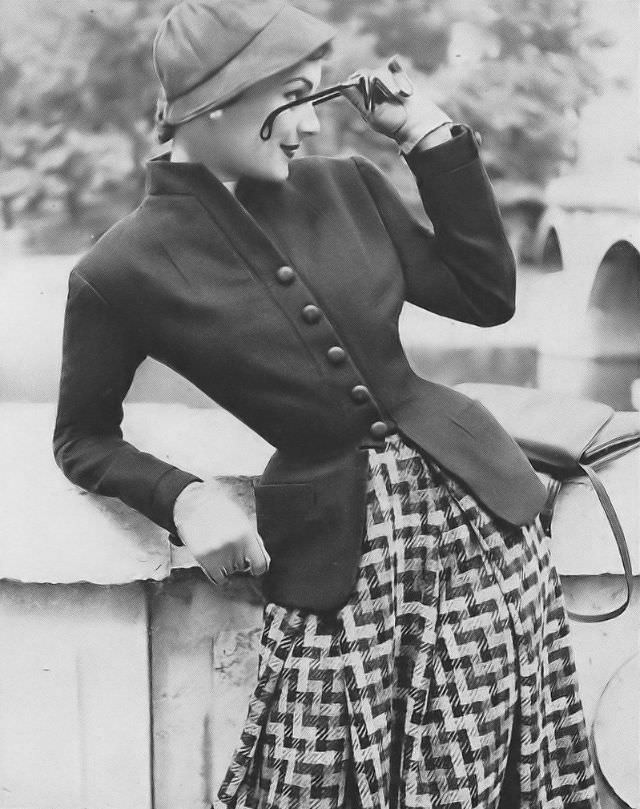
Leaning against a low stone wall, the Vogue model strikes a poised, mid-century profile as she lifts a pair of dark sunglasses with a gloved hand. A close-fitting hat frames her face, while the blurred greenery behind her keeps attention on the clean lines of the outfit. The styling feels effortlessly urban yet outdoorsy, the kind of polished look designed to read clearly even in a candid, on-location fashion shot.
Madeleine de Rauch’s gray flannel-and-tweed ensemble is built around structure: a sharply tailored jacket with a pronounced waist and a row of bold buttons that create a strong vertical rhythm. Below, a full skirt in a graphic, check-like pattern introduces movement and contrast, balancing the severity of the bodice with lively texture. The accessories—hat, gloves, and sunglasses—underscore the early 1950s fascination with coordinated dressing, where practical pieces were refined into statements of chic modernity.
Published in Vogue on September 1, 1952, the photograph reflects a postwar fashion culture that prized craftsmanship, silhouette, and the subtle luxury of good cloth. The emphasis on tweed and flannel points to seasonal dressing and the enduring appeal of menswear-inspired textiles reimagined for women’s wardrobes. As a piece of fashion history, it captures the era’s confident elegance—tailoring made soft by pattern, and sophistication sharpened by attitude.