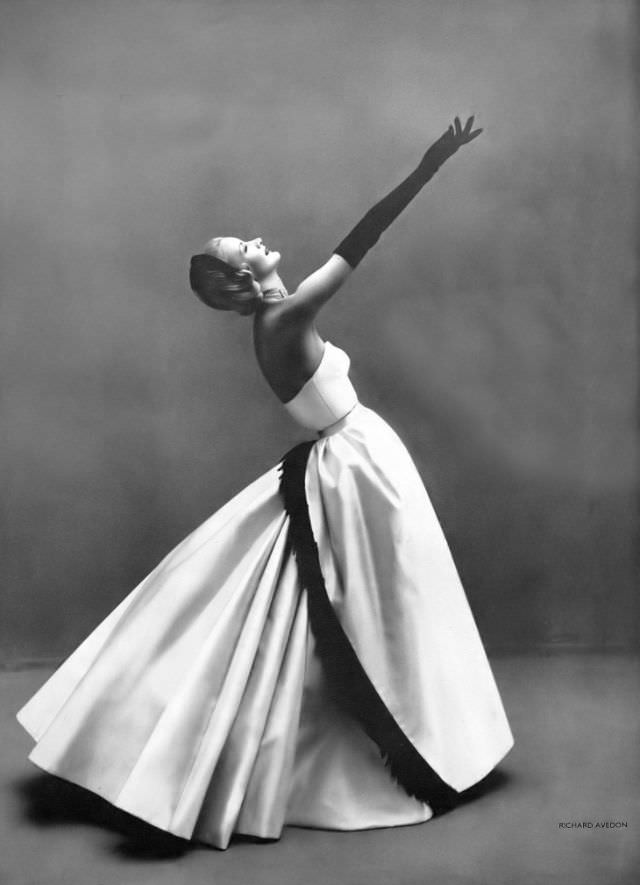
Poised in a dancer’s arc, Sunny Harnett stretches one gloved arm toward the air, turning a fashion pose into pure choreography. The white satin gown by Madeleine de Rauch is built for spectacle: a smooth, fitted bodice gives way to a sweeping skirt that fans outward in crisp, sculptural folds. Against a plain studio backdrop, every line reads clearly—the sheen of satin, the long dark gloves, and the dramatic sweep of fabric that suggests movement even in stillness.
December 1954 was a moment when couture’s postwar confidence leaned into clean silhouettes and controlled drama, and Harper’s Bazaar UK knew how to frame that modern elegance. The composition is spare yet theatrical, letting contrast do the talking: light dress against darker accents, bare shoulders against the sleek length of gloves, a lifted chin and an upturned gaze that amplify the gown’s sense of aspiration. What might have been a simple white evening dress becomes a statement about precision, luxury, and the disciplined glamour of mid-century style.
Fashion historians often return to images like this for how they translate clothing into cultural mood, making fabric feel like architecture and attitude at once. Madeleine de Rauch’s design reads as both classic and forward-looking, with a purity of color offset by bold, graphic detailing that guides the eye down the skirt. For anyone searching vintage fashion photography, 1950s couture, or Harper’s Bazaar editorial style, this photograph offers an enduring lesson in how a single gown—caught at exactly the right angle—can embody an era.