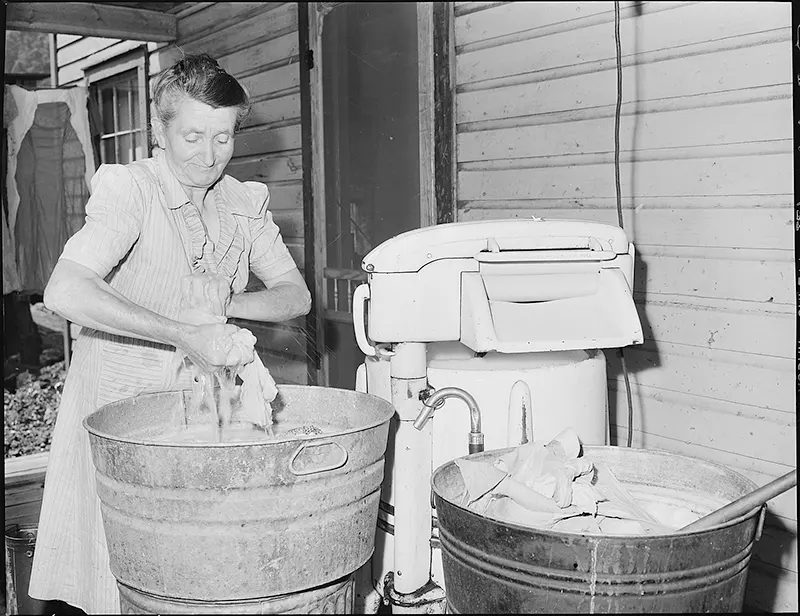
Washday at Bradshaw Mine in West Virginia, 1946, comes into focus through the steady work of a miner’s wife leaning over a galvanized tub, hands deep in suds as she wrings out a garment. The porch setting and plain wooden siding suggest the tight, practical architecture of a company community, where home life unfolded close to the rhythms of the mine. Her striped dress, rolled sleeves, and concentrated posture speak to a routine that was physically demanding and rarely photographed with such clarity.
Alongside the washtub sits a sturdy washing machine with a wringer attachment, a reminder that “modern” convenience often arrived in piecemeal fashion. Even with a powered washer, the process still required lifting, rinsing, and twisting cloth by hand, turning laundry into a multi-step operation rather than a push-button task. The contrast between the metal tubs and the bulky appliance hints at a transitional moment in domestic technology—part innovation, part endurance.
Mining history is often told in terms of shafts, strikes, and machinery, but images like this widen the story to include the labor that kept households running. In coal communities, cleanliness was more than comfort; it was a constant battle against grit carried home on clothes and skin, made harder by limited space and resources. For readers interested in West Virginia coal country, women’s work, and everyday life in 1940s America, this photograph offers an intimate, SEO-worthy glimpse of domestic resilience on the mine’s doorstep.