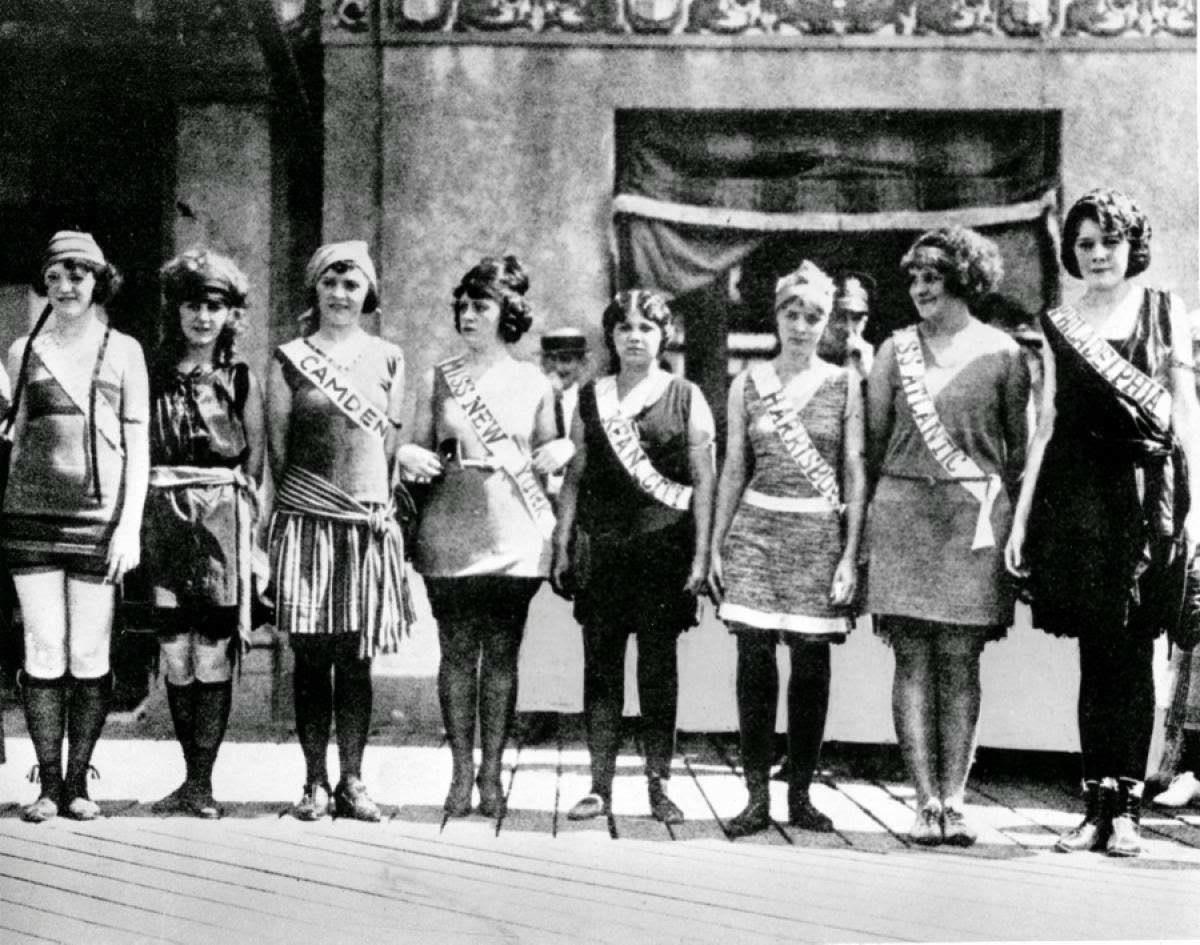
Along the Atlantic City boardwalk in 1921, contestants stand in a neat row for what the title identifies as the first Miss America pageant, their posture formal even as the seaside setting suggests leisure and spectacle. Sashes cut diagonally across simple, era-typical swimwear, turning each woman into a walking placard of hometown pride and civic promotion. Behind them, a plain backdrop and the boardwalk planks keep the focus on faces, fabrics, and the public ritual of being judged in daylight.
Flapper-era styling is everywhere in the details: bobbed hair, close-fitting caps, and hemlines that would have read as daring to some audiences of the day. The outfits vary from dark to light and from sleeveless to short-sleeved, hinting at personal taste and local expectations rather than a single standardized uniform. A few sashes are legible—“CAMDEN” among them—anchoring the scene in the pageant’s early emphasis on representing communities as much as individual glamour.
Pageant history often gets reduced to glitter, yet the lineup also speaks to the period’s changing ideas about modern womanhood, public entertainment, and the growing marketing power of mass events. The Miss America competition emerged in a moment when tourism, newspapers, and celebrity culture could turn a boardwalk gathering into a national story. As a piece of Fashion & Culture, the photograph preserves that uneasy blend of celebration and scrutiny—young women framed as symbols of the Jazz Age, poised between personal ambition and a rapidly expanding spectacle economy.