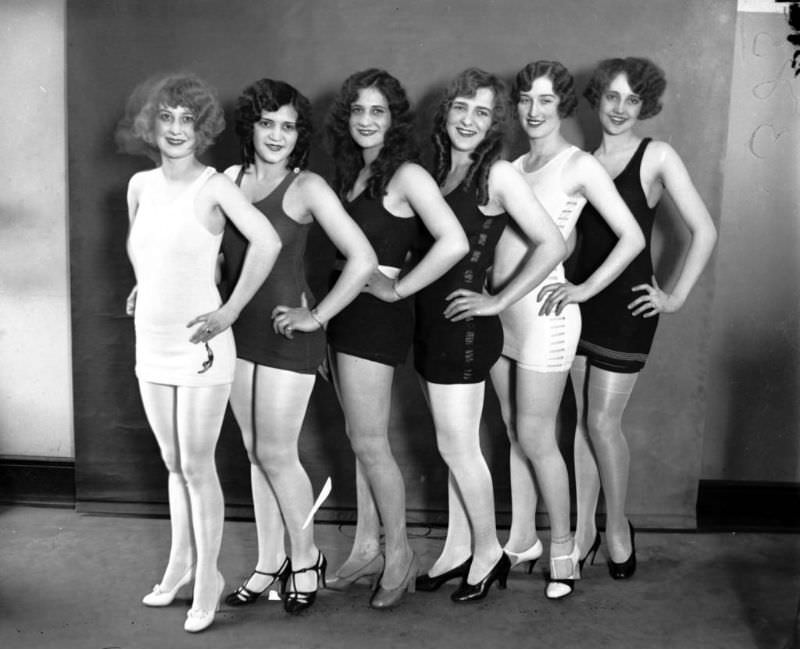
Six young women pose in a neat diagonal line, hands set confidently at their hips as they face the camera with practiced ease. Their sleek, sleeveless swimsuits and light hosiery create a crisp contrast against a plain studio backdrop, while softly waved bob hairstyles and bright, composed smiles place the scene squarely in the Jazz Age. A mix of dark and light suits, paired with low heels, hints at the careful styling that turned a simple lineup into a modern spectacle of poise and presentation.
Behind the glamour of the Miss Chicago contest in 1927 sits a telling snapshot of American fashion and culture, when pageants helped define public ideals of beauty, fitness, and “modern” femininity. The bathing costume—once scandalous, then increasingly normalized—became a stage prop for changing social rules, as women’s bodies and wardrobes moved into new public view. Even the straightforward setting suggests publicity at work: a controlled image designed for newspapers and promotional use, where posture and symmetry mattered as much as personality.
In the wider world of early 20th-century beauty pageants, scenes like this bridge entertainment and social history, showing how contests fed into the era’s fascination with consumer style, celebrity, and city pride. The contestants’ coordinated stance and confident expressions read like a rehearsal for judging—an early form of branding before that word became common. For readers searching for 1920s pageant photography, Miss Chicago history, or Jazz Age women’s fashion, this image offers a compact record of glitz, glamour, and the grit of performance demanded by the spotlight.