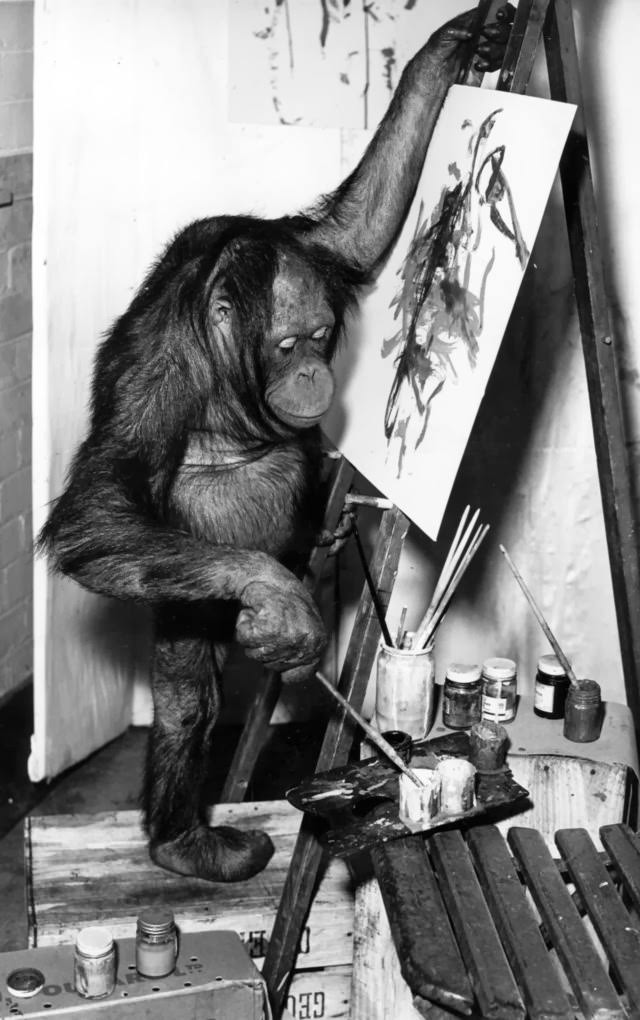
An orangutan stands at an easel with the seriousness of a studio painter, one long arm lifted high as if to steady the canvas while the other works below. The brushstrokes on the paper read as bold, energetic abstraction—dark arcs and quick slashes that feel more like motion than representation. Shot around the mid-1950s, the scene leans into the era’s fascination with novelty and spectacle, yet the animal’s focused posture gives it an unexpectedly contemplative mood.
In the cramped corner of the room, the everyday tools of art-making sit within reach: jars of paint, a water container, and a palette that looks well used. The simple wooden easel and scuffed surfaces suggest a behind-the-scenes setup rather than a grand gallery moment, making the photograph feel candid and immediate. For viewers today, the details invite a closer look at how such staged “animal artist” moments were arranged and photographed for maximum impact.
Beyond the humor hinted at by the title, the image opens a window onto mid-century popular culture, when newspapers, zoos, and traveling exhibitions often promoted clever animal performances as charming entertainment. It also intersects with wider 1950s conversations about modern art, creativity, and what audiences considered “real” artistic intention. Whether you read it as a playful curiosity or a telling artifact of its time, this historical photo—an ape painting a picture, c. 1955—remains a memorable snapshot of spectacle, craft, and curiosity.