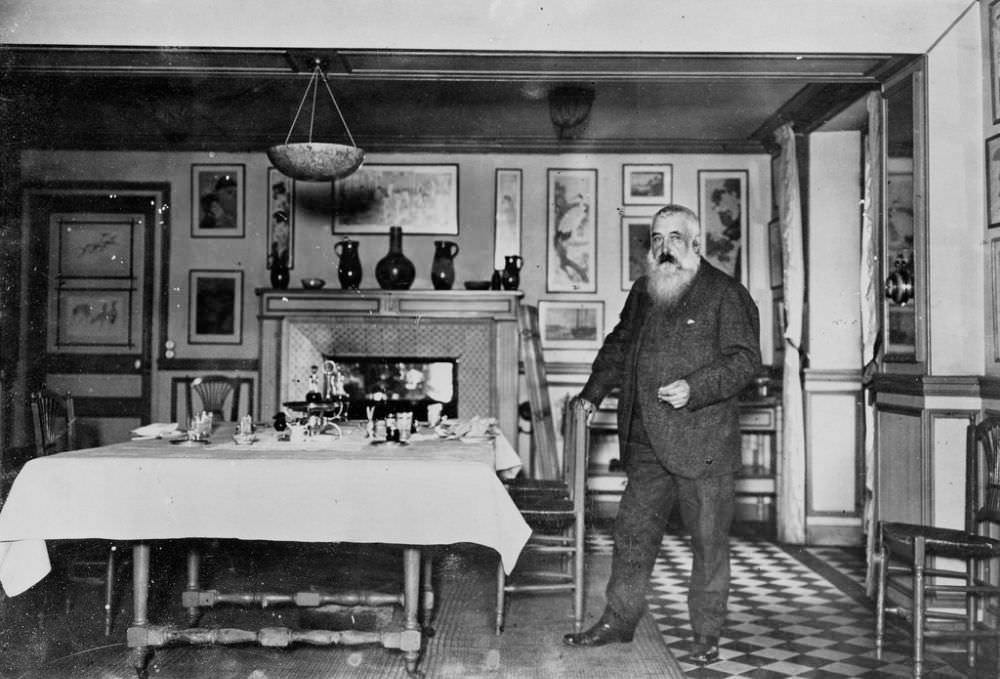
A broad dining table dressed in white linen anchors the room, set beneath a suspended lamp and surrounded by sturdy chairs that suggest conversation, guests, and routine. Framed artworks line the walls in a careful rhythm, turning a domestic interior into a private gallery, while the patterned floor pulls the eye toward the hearth and its mantel of vases and small objects. For anyone searching Claude Monet Giverny studio and home imagery, this scene offers a tangible sense of how art and everyday life could share the same space.
Near the right side of the photograph, a bearded man stands almost as if caught mid-step, positioned between the open doorway and the decorated fireplace. His presence lends scale and immediacy, making the carefully arranged prints and drawings feel less like museum pieces and more like part of a lived-in environment. The room’s mix of order and informality—tableware left out, chairs slightly askew, walls densely hung—evokes the practical world behind the calm surfaces of Impressionist painting.
What makes this view so compelling is its quiet suggestion of the “personal eden” described in the title: the studio and gardens of Giverny were not just subjects, but an atmosphere cultivated through daily habits and aesthetic choices. Indoors, the eye meets art at every turn; one can easily imagine how that visual abundance might echo the same sensitivity to color and light sought outdoors among flowers and water. As a historical photo paired with artworks, it invites readers to linger on the threshold where home, collection, and creative practice become one.