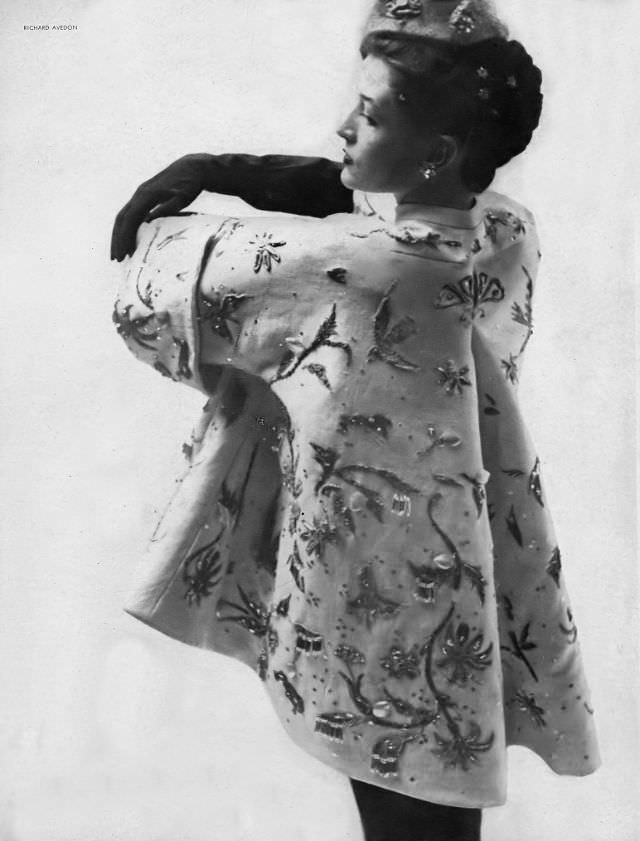
Poised in profile, Maxime de la Falaise turns slightly away from the viewer, letting the garment speak first. The white linen evening jacket—credited to Christian Dior in 1948—hangs with an easy, sculptural volume, its broad back presented like a canvas. Against the pale studio backdrop, the silhouette reads clean and modern, while her lifted arm and composed expression add a sense of quiet command.
Light catches the jacket’s intricate embroidery, described as worked in silver and steel, scattering tiny flashes across botanical and starburst motifs. The embellishment feels both celebratory and disciplined: dense enough to dazzle, yet arranged with couture precision so the eye moves from shoulder to hem. Her neatly arranged updo and small earrings keep the styling restrained, ensuring the craftsmanship remains the focal point of the portrait.
Set in the postwar moment when Paris fashion reasserted its influence, the image embodies the era’s renewed appetite for luxury and meticulous handwork. It also works as a study in how couture was photographed and remembered—less about a literal event, more about mood, material, and the promise of an evening out. For readers searching vintage Dior, 1940s couture, or Maxime de la Falaise style, this photograph offers a concentrated glimpse of Fashion & Culture at its most refined.