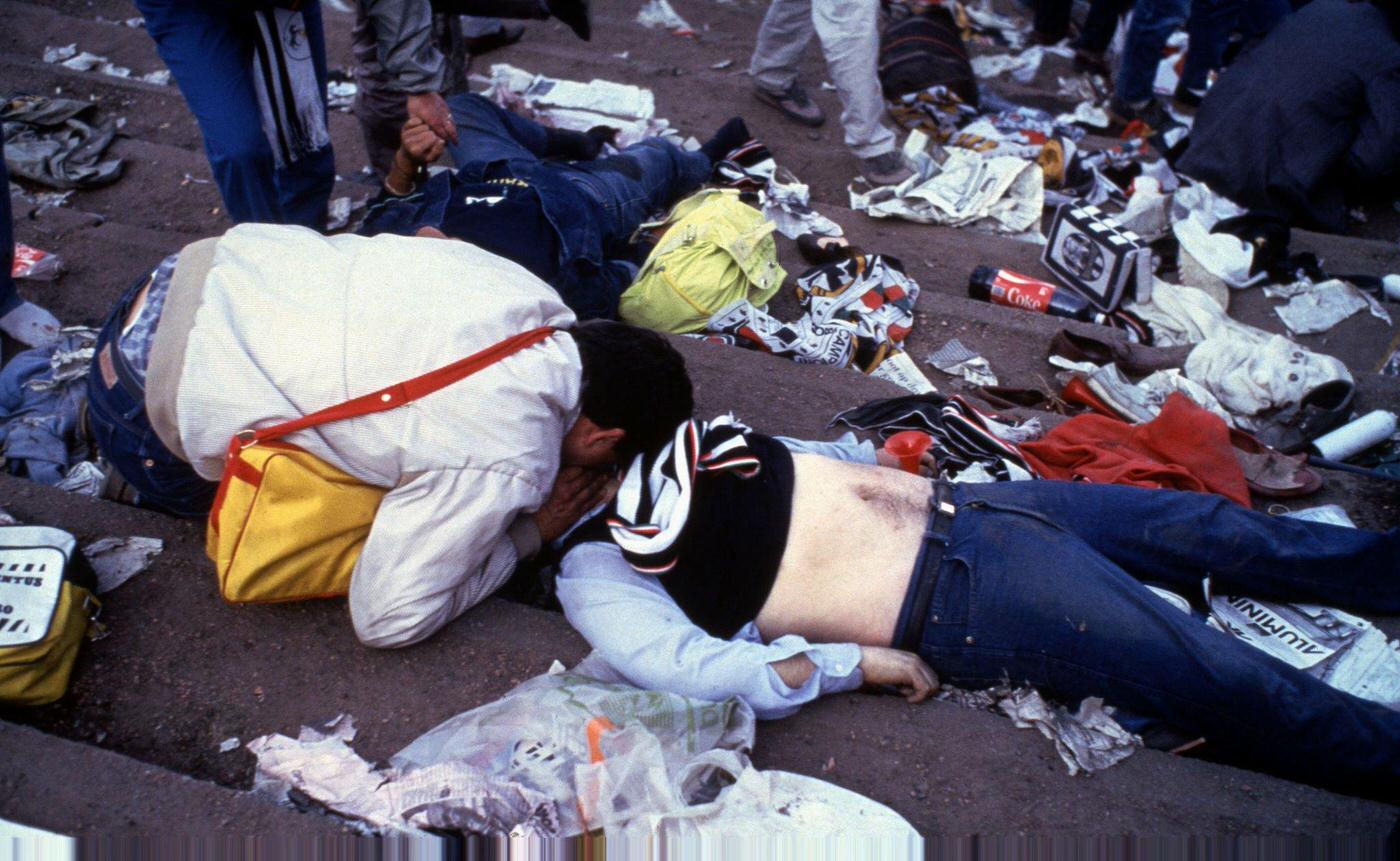
On the stadium ground, amid crushed paper, scattered clothing, and the debris of a matchday crowd, a Juventus supporter bends close to an injured friend, trying desperately to bring him back. The scene is intimate and harrowing: bodies lie stretched out nearby, legs and shoes of other spectators frame the chaos, and a black-and-white scarf stands out against the dusty surface like a reminder of why everyone came. What should have been the exhilaration of a European Cup final has collapsed into urgent, improvised first aid.
Few events in modern football history carry the same weight as the 1985 European Cup Final and the Heysel Stadium disaster, where 39 people died. Photographs like this refuse the comfortable distance of statistics, focusing instead on a single act of human response—panic giving way to care, a fan becoming a rescuer in the space of a heartbeat. The littered concourse and abandoned belongings tell their own story of a crowd suddenly transformed by fear, confusion, and loss.
For readers searching for the Heysel tragedy, Juventus supporters, or the darker side of European football history, this image serves as a stark record of what violence and poor safety can unleash in a sporting arena. It also preserves something easily overlooked: solidarity in the midst of catastrophe, when ordinary people tried to protect one another with no time to think. Remembering moments like this is part of understanding how football was changed forever by 1985—on the pitch, in the stands, and in the rules that followed.