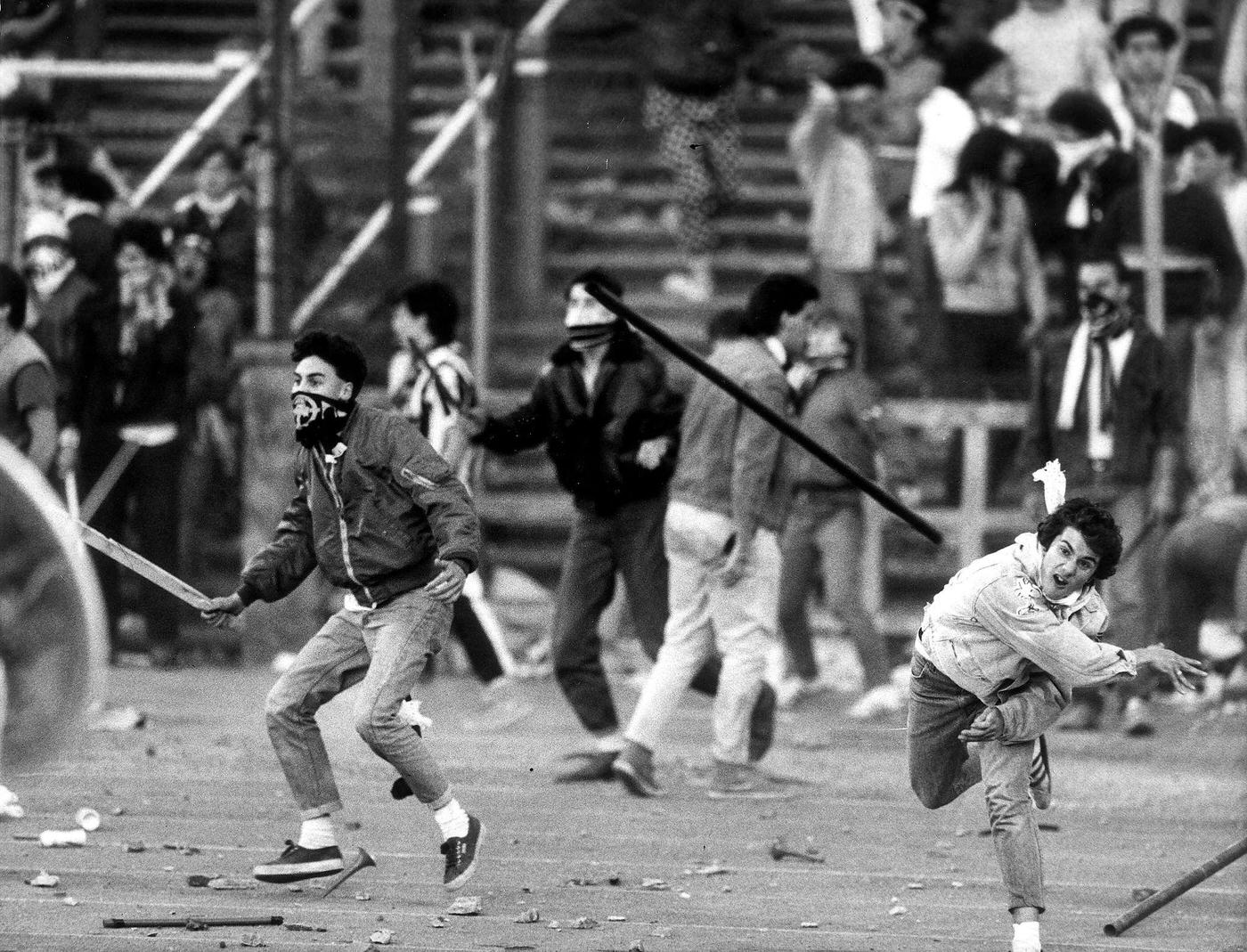
Chaos spills across the stadium concourse as masked men surge forward, swinging sticks and hurling debris while other spectators recoil in panic. Scattered litter and broken objects underfoot underscore how quickly a football evening can turn into a street fight, with the stands looming in the background like a silent witness. The tension in every blurred step and clenched posture makes the scene feel immediate, violent, and tragically familiar.
Linked to the 1985 Juventus vs. Liverpool match, the photograph points directly to the wider horror remembered as the Heysel Stadium disaster. It is not a celebration of sport but a record of fan violence—English hooliganism colliding with Italian supporters—during one of football’s darkest chapters. The image’s raw documentary quality helps explain why this event became a turning point in discussions of crowd control, segregation, and accountability in European football.
For readers searching the history of football hooliganism, Heysel 1985, or Juventus Liverpool tragedy, this moment offers more than shock value: it captures the breakdown of order that preceded catastrophe. What stands out is the contrast between ordinary clothing and extraordinary aggression, a reminder that mass events are only as safe as the structures—and decisions—around them. In preserving this frame, the post invites reflection on how the game was changed forever by the consequences of that night.