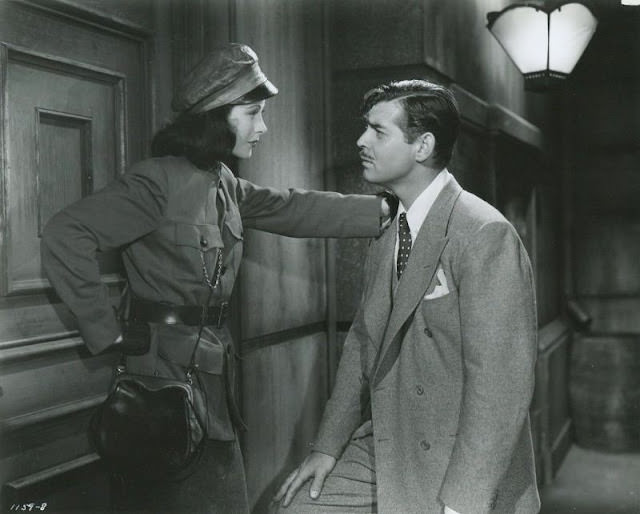
In a tense corridor lit by a hard, overhead glow, Hedy Lamarr leans in with the cool authority of a uniformed figure, one arm braced as if she’s stopping the conversation from slipping away. Across from her, Clark Gable sits in a neatly tailored suit, his posture guarded and his expression set—caught between charm and suspicion in that unmistakable classic Hollywood style. The composition does more than stage two stars; it frames a power shift, with Lamarr’s direct gaze and decisive stance commanding the moment.
Released in 1940, “Comrade X” trades on the era’s fascination with international intrigue, romance, and the slippery boundaries between performance and truth. The contrast in costumes—military practicality against polished civility—hints at the film’s playful push-and-pull between duty and desire, secrecy and confession. Even without dialogue, the scene reads like a negotiation, where flirtation can be a tactic and a hallway can feel like a trap.
For fans of classic movies and vintage Hollywood photography, this still is a vivid snapshot of why Lamarr and Gable remain a timeless on-screen pairing. Their body language does the heavy lifting: her poised confidence meeting his wary attention, both actors giving the camera a story in a single beat. It’s an evocative piece of Movies & TV history that rewards a closer look, whether you’re revisiting “Comrade X” or discovering its star power for the first time.