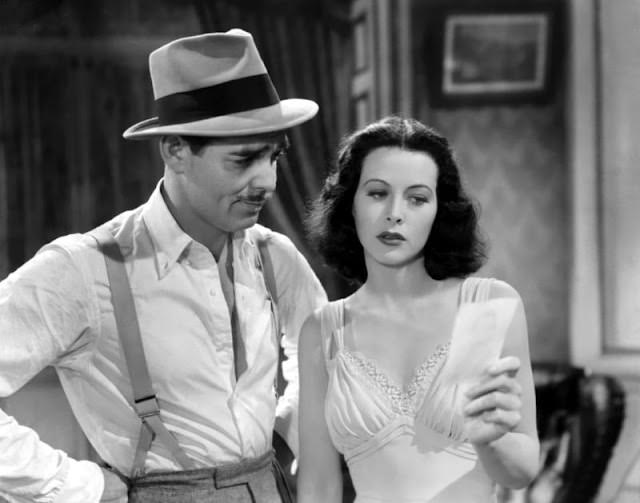
Tension and charm share the frame as Hedy Lamarr studies a sheet of paper while Clark Gable, hat tipped and sleeves rolled, leans in with that unmistakable ease of a classic Hollywood leading man. Their body language does much of the storytelling—her focused, poised composure set against his relaxed confidence—hinting at a scene where secrets, wit, and quick decisions matter. Even in a single still, the pairing feels like a carefully balanced dance between glamour and intrigue.
In “Comrade X” (1940), the look and mood of the era come through in crisp lighting, tailored menswear, and Lamarr’s soft waves and elegant costume detailing. The setting reads like an interior that could belong to any number of studio-built worlds: tidy, controlled, and cinematic, with just enough background texture to keep attention on the stars. That contrast—everyday objects like a note or letter elevated by star power—was a hallmark of Movies & TV publicity photography from Hollywood’s golden age.
For fans searching for Hedy Lamarr and Clark Gable “Comrade X” photo, this image distills why their on-screen pairing still draws attention decades later. It’s a snapshot of studio-era storytelling where romance, comedy, and suspense could pivot on a glance and a prop held in hand. As a piece of film history, it invites a closer look at performance, costume, and the visual language that made 1940s cinema so enduring.