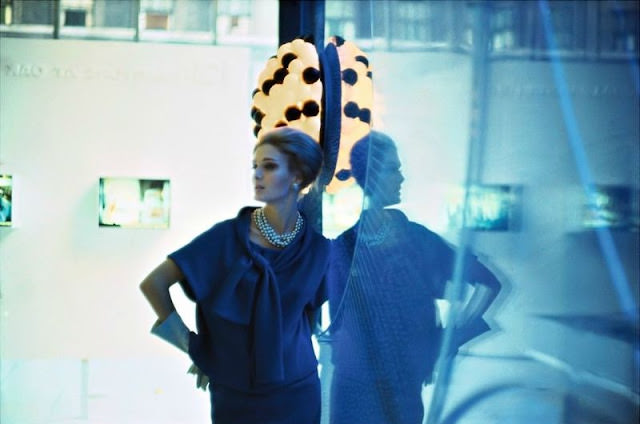
Deborah Dixon stands poised behind glass in New York City, her silhouette sharpened by a cool, blue cast that makes the street feel like a stage. A sleek updo and a sculptural, dark ensemble create a clean mid-century line, while layered jewelry at her throat catches the available light with a quiet insistence. The city around her is present but softened, reduced to modern surfaces and hints of movement.
Reflections double the scene, placing Dixon beside her own mirrored profile and turning a simple pose into a study of identity and presentation. Behind her, rounded lights bloom like a stylized crown, echoing the era’s fascination with bold shapes and graphic design. The window becomes both barrier and frame, suggesting the shifting boundary between everyday urban life and the curated world of fashion.
New York’s 1960 energy hums in the blur of passing forms and the anonymous architecture that recedes into the background, giving the model’s stillness extra authority. Rather than relying on a studio backdrop, the photograph embraces the city’s glare, glass, and glow, showing how fashion photography could borrow the immediacy of the street without losing elegance. In that mix of modernity and glamour, Dixon’s composed stance becomes a small, unforgettable moment in the visual culture of the 1960s.