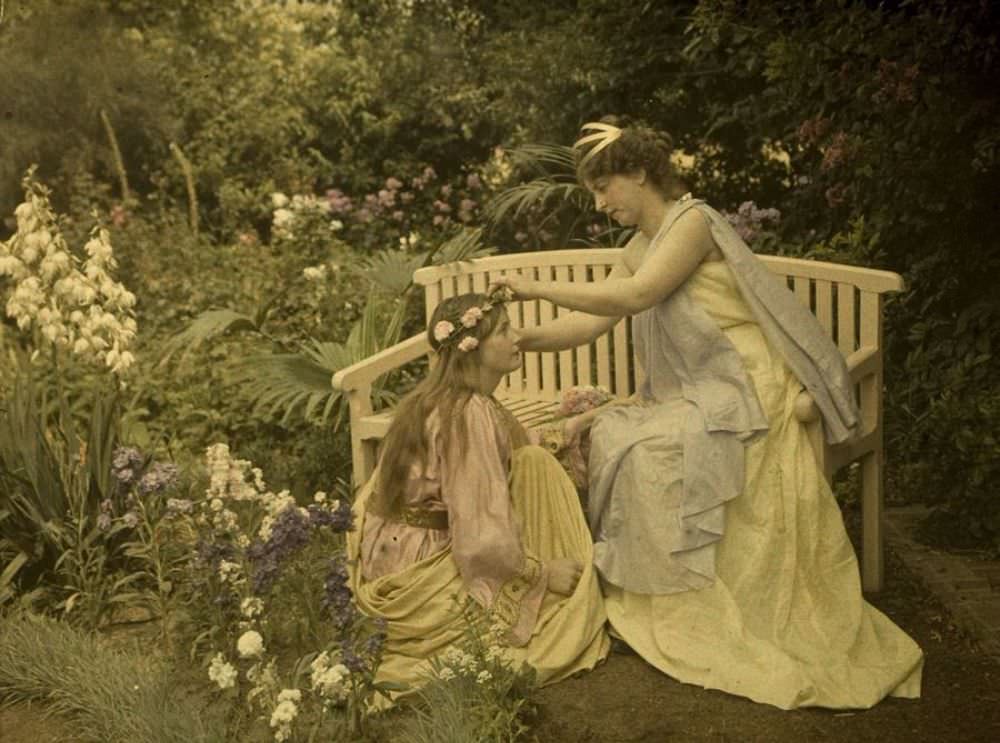
Soft summer light filters through a dense garden as a woman seated on a slatted bench leans forward to arrange a flower wreath on a young girl’s head. The child, kneeling in the grass with long hair spilling down her back, seems entirely absorbed in the gentle attention, while blossoms and leafy borders frame them like a private stage. In keeping with the title, “Innocence, c.1912,” the scene lingers on tenderness and quiet ritual rather than grand events.
Colorization brings out the period feel in a particularly intimate way: pale fabrics, muted greens, and the warm tones of skin and petals make the moment read less like a distant artifact and more like an afternoon you could step into. The flowing dresses and soft drapery echo early 20th-century fashion, when leisure portraits often leaned on pastoral settings and carefully composed poses. Even the bench and planted beds suggest a cultivated domestic world, where childhood and womanhood are pictured side by side.
As a historical photo, it’s a reminder that everyday gestures—fixing a ribbon, crowning a head with flowers, pausing in a garden—were worth preserving on film. For collectors of antique photography, Edwardian-era imagery, and vintage colorized portraits, this post offers a rich example of how sentiment and staging worked together in family scenes of the time. The result is both decorative and documentary: a small, human story of care, innocence, and the garden’s brief bloom.