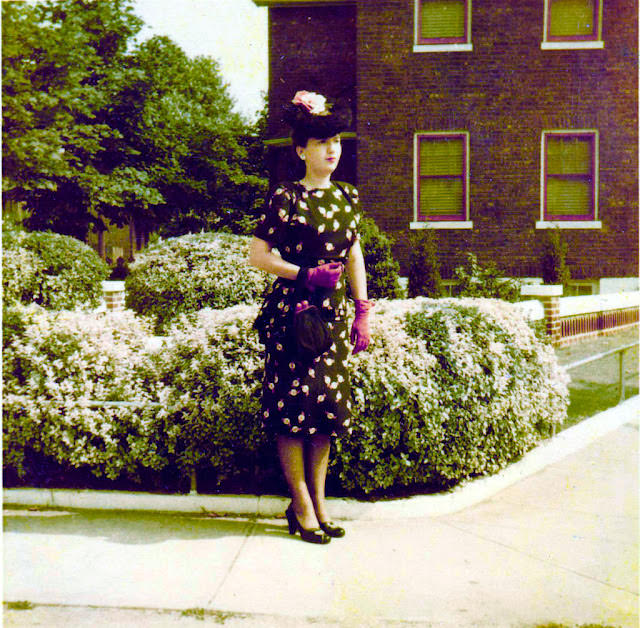
Poised on a tidy sidewalk beside manicured hedges, a well-dressed woman embodies the polished public look celebrated in 1950s fashion culture. Her dark, knee-length dress is patterned with light motifs that read as playful yet controlled, and the fitted silhouette hints at the era’s preference for a defined waist and carefully balanced proportions. Behind her, a brick building with crisp window frames and neat landscaping sets a middle-class, postwar backdrop where style was often displayed in everyday neighborhoods, not just on runways.
Accessories do much of the storytelling here: a structured hat crowned with a prominent floral accent, matching gloves in a vivid tone, and a small handbag held close as if part of a practiced routine. The pointed heels and sheer stockings complete the ensemble, projecting the decade’s ideal of ladylike sophistication and ready-for-anything composure. Even her stance—still, deliberate, and camera-aware—suggests how fashion in the 1950s operated as social language, communicating respectability, femininity, and modern confidence.
Color adds another layer, lending warmth and immediacy to details that black-and-white images sometimes flatten, from the contrast of the dress to the standout pop of the gloves. The scene evokes a period when “dressed up” was less an occasion than a habit, shaped by department-store trends, magazines, and a booming consumer economy. As a pictorial glimpse into 1950s women’s style, it captures the decade’s signature blend of glamour and restraint—an elegance made tangible in fabric, posture, and the quiet theater of a suburban street.