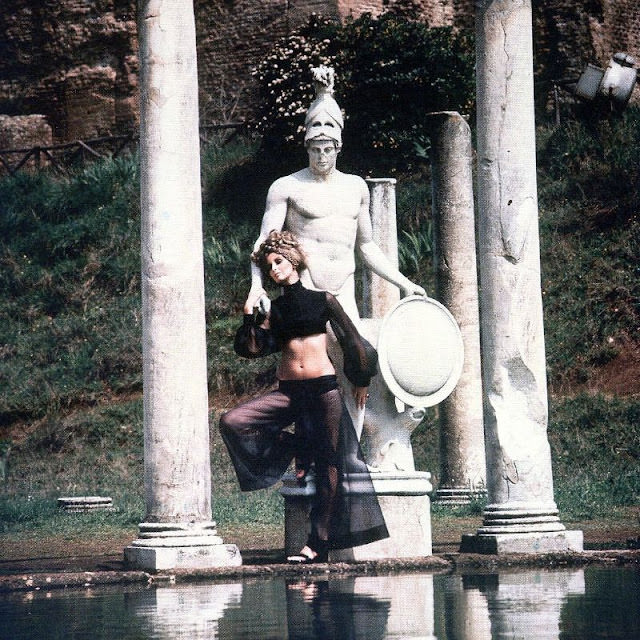
Between weathered marble columns at Hadrian’s Villa outside Rome, a fashion model is posed in vivid contrast to antiquity, her dark, sheer ensemble cutting a modern silhouette against pale stone. The scene is arranged like a stage set: a shallow pool in the foreground catches faint reflections, while the ruin’s upright shafts and broken fragments create a classical rhythm behind her. Color and texture do much of the storytelling—sunlit stone, green groundcover, and the inky transparency of fabric working together to frame a distinctly late-1960s attitude.
Samantha Jones appears relaxed yet deliberate, one hand lifted toward her hair as if caught mid-gesture, the other resting with casual confidence near a sculptural element. A muscular classical statue stands just behind, its helmeted head and idealized torso evoking Roman power and mythology, turning the composition into a dialogue between the ancient body and contemporary style. The styling leans into the era’s fashion revolution—bold exposure, flowing lines, and an editorial sense of drama that reads immediately as magazine photography rather than tourist documentation.
Published for Time Magazine in 1969, the image uses Rome’s archaeological grandeur as more than a backdrop; it becomes a commentary on timelessness and reinvention. Hadrian’s Villa, long associated with imperial taste and architectural experimentation, provides an apt setting for an editorial that treats clothing as cultural statement. For readers searching fashion history, 1960s photography, or Italian heritage sites in visual culture, this photograph stands as a striking example of how modern fashion learned to borrow the authority of the past while insisting on its own new freedoms.