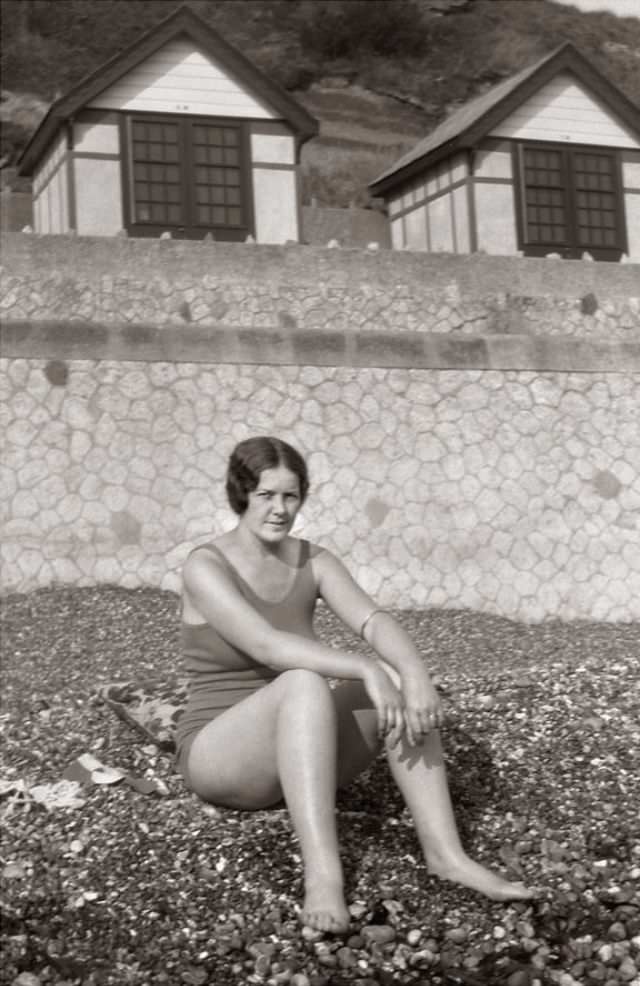
Against a pebbled shoreline, a young woman sits with an easy, unposed confidence, her one-piece swimsuit clinging in the clean, practical lines associated with 1930s swimwear. The suit’s broad straps and modest cut suggest an era balancing athletic function with a newly modern silhouette, while her short, neatly styled hair reinforces the streamlined look that fashion magazines and seaside snapshots helped popularize. Sunlight catches on bare arms and legs, lending the scene a warm immediacy that makes the period feel close rather than distant.
Behind her, a high stone seawall rises in tiers to a row of small beach huts, their dark doors and simple gables forming a geometric backdrop. These structures hint at an organized seaside culture—day trips, changing cabins, and the rituals of resort leisure—where clothing became part of the spectacle of modern life. The contrast between rugged shingle, engineered masonry, and tidy huts frames the bather as both visitor and participant in a landscape shaped for recreation.
Elegance in the 1930s often meant restraint: a suit that covered more than later styles, yet emphasized the body through fit, fabric, and posture rather than decoration. Images like this help trace the evolution of vintage swimwear from heavy, utilitarian garments toward sleeker designs that celebrated movement, tanning, and a healthier ideal. As fashion and culture intertwined along the water’s edge, the beach became a public stage where everyday people quietly defined what “modern” looked like.