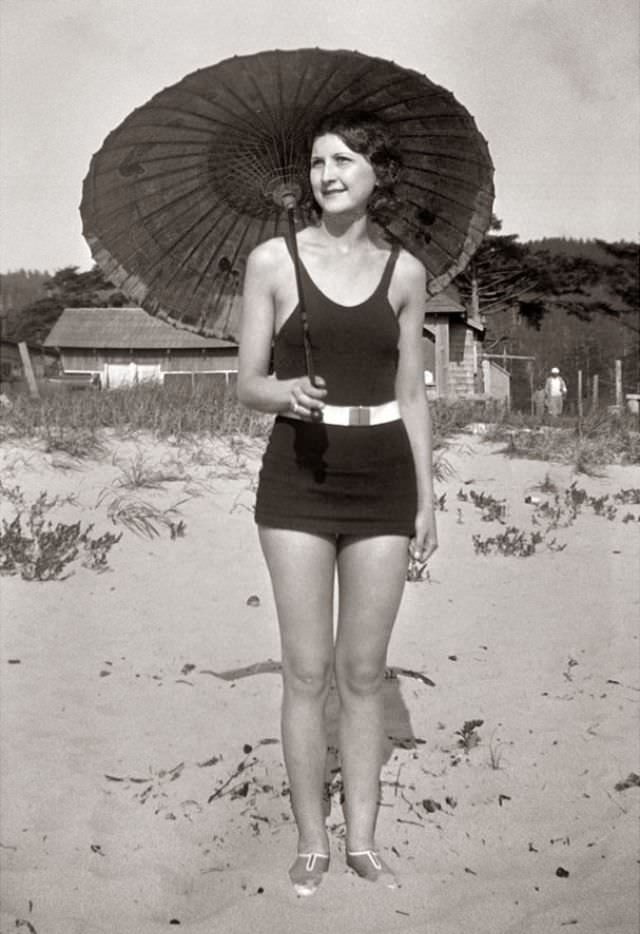
A young woman stands on a sandy beach holding a wide parasol, its circular canopy framing her face like a stage prop from an earlier era. Behind her, low buildings and scrubby dunes hint at a modest seaside setting, while the bright sun explains the need for shade. The pose is relaxed but deliberate, the kind of casual elegance often preserved in family albums and fashion features alike.
Her swimwear reflects the streamlined sophistication associated with 1930s style: a fitted one-piece with broad shoulder straps and a short, skirt-like bottom that balances coverage with a distinctly modern silhouette. A bold, light-colored belt cinches the waist, emphasizing the decade’s love of clean lines and figure-conscious tailoring even in leisurewear. Simple beach shoes complete the look, reinforcing how swim fashion of the period often bridged practical seaside comfort and city-ready polish.
Taken together, the parasol, the tailored bathing suit, and the unpretentious shoreline backdrop speak to an evolving culture of recreation—where going to the beach was as much about presentation as it was about swimming. The photograph illustrates how vintage 1930s swimwear could project confidence without excess, using thoughtful details rather than flashy ornament. For readers tracing the evolution of elegance in fashion history, it’s a vivid reminder that “beachwear” once meant a carefully composed outfit, designed to be seen as much as worn.