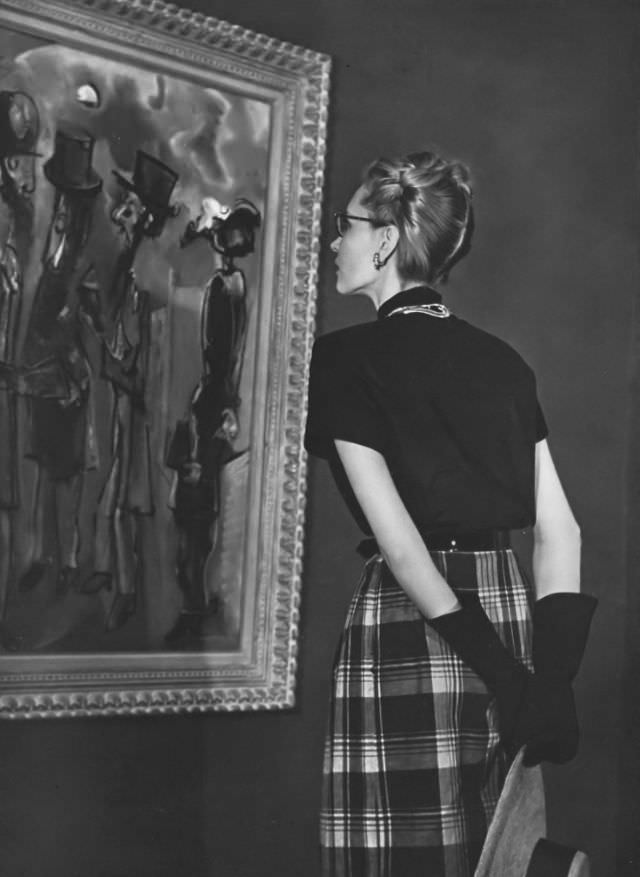
Poised in profile beside a framed modern painting attributed to Max Weber, a Vogue model from 1945 turns a quiet gallery moment into a lesson in mid-century style. Her bright-and-black gingham dress is cut with crisp short sleeves and a fitted bodice, then drops into a bold plaid skirt that reads as both practical and striking. A black patent leather belt by David Crystal cinches the waist, sharpening the silhouette and giving the look that polished, postwar confidence Vogue readers sought.
The photographer leans into contrast: matte fabric against glossy belt, soft skin against dark gloves, and the model’s smooth updo set off by delicate earrings and eyeglasses. Seen mostly from the back, she appears to be studying the artwork, a storytelling choice that makes fashion feel lived-in rather than staged. The plaid’s geometry echoes the painting’s angular figures, linking textile pattern and modernist brushwork in a single visual rhythm.
As fashion history, the scene speaks to how 1940s editorial photography loved cultural crossovers—couture framed by art, elegance framed by intellect. The dark wall and ornate frame create a museum-like hush, letting the dress’s checks and the skirt’s tartan energy do the talking even in monochrome. It’s an enduring Vogue tableau: American modern art, refined accessories, and a tailored day dress presented as both wearable and aspirational.