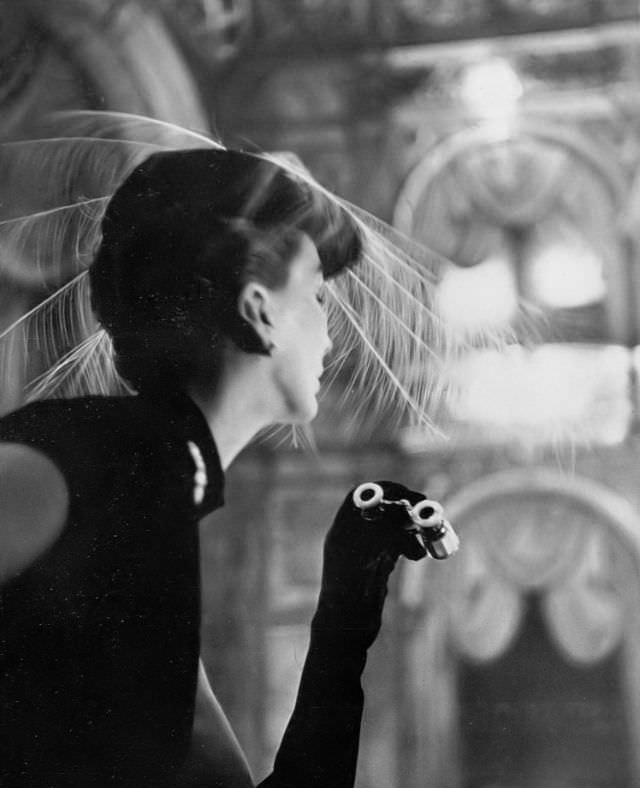
Profiled in soft focus, Barbara Goalen leans forward as if following the rise of a curtain, her posture poised between stillness and anticipation. A dramatic hat crowned with a spray of white egret feathers arcs over her head like a plume of light, the airy strands echoing the blurred architectural curves behind her. The composition feels deliberately theatrical, turning a quiet moment into a small performance of mid-century glamour.
In her gloved hand, opera glasses by Asprey gleam with compact precision, a luxury accessory that suggests the rituals of an evening out—watching, being seen, and choosing exactly what to notice. The dark, sculpted silhouette of her coat and hat contrasts with the delicate feathers, balancing severity and flourish in a way that reads instantly as early-1950s high fashion. Even without a full view of the setting, the arched background and softened highlights conjure the world of grand interiors associated with culture, society, and spectacle.
Fashion historians often return to images like this because they distill an era’s ideals into a handful of details: immaculate tailoring, statement millinery, and accessories meant for the opera or theatre. Goalen’s side profile and carefully arranged styling underline why she is so frequently cited as a defining face of British modeling, where elegance was communicated through line, restraint, and impeccable finish. As a piece of vintage fashion photography from 1951, it remains a search-worthy snapshot of postwar style, luxury branding, and the lasting allure of couture-inspired eveningwear.