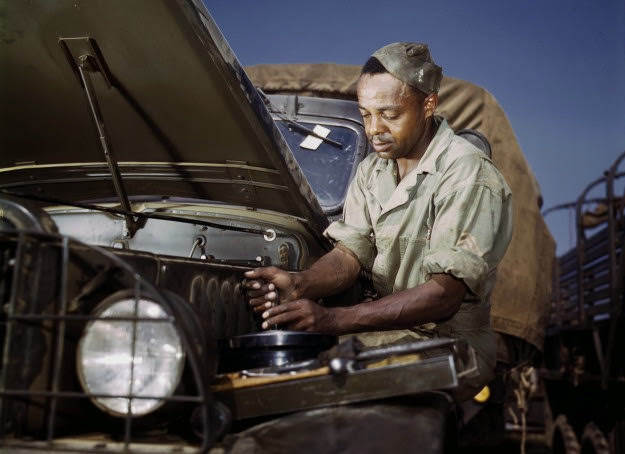
Under the raised hood of a military vehicle at Fort Knox, Kentucky, a mechanic concentrates on the essential, unglamorous work that kept the Army moving in 1942. The colorization brings out the dusty tones of the motor maintenance area and the sheen of metal parts, while the worker’s rolled sleeves and steady posture suggest long hours spent diagnosing and repairing engines. Details like the headlamp and the open engine bay draw the eye into the practical world of wartime vehicle upkeep.
Wartime training centers relied on a constant rhythm of inspection, lubrication, and repair, and the motor pool was a crucial link between the parade ground and the field. Fort Knox—best known for armor and mechanized training—depended on skilled hands to keep trucks and equipment ready for daily demands. In a single frame, the scene underscores how the war effort ran not only on strategy and production, but also on routine maintenance performed with patience and precision.
Colorized historical photos like this one can feel especially immediate, narrowing the distance between modern viewers and the people who lived through World War II. The title’s wording points to the realities of race and labor in the U.S. military system of the era, reminding us that service and contribution took many forms, often shaped by segregation and unequal opportunity. For readers exploring Fort Knox history, WWII home-front labor, or U.S. Army motor maintenance, this image offers a grounded, human perspective on the machinery behind mobilization.