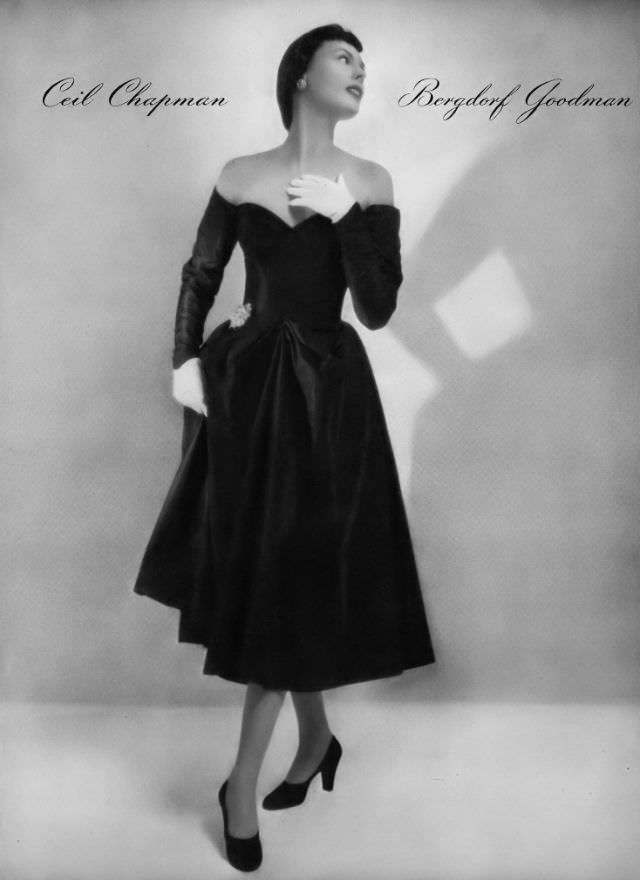
Poised beneath the scripted names “Ceil Chapman” and “Bergdorf Goodman,” Meg Mundy turns her face upward in a moment of theatrical calm, as if listening for music just beyond the frame. The studio backdrop is spare, letting the silhouette do the talking while soft geometric shadows drift across the wall like stage lighting. Her gloved hand rests at her collarbone, a gesture that heightens the drama without distracting from the clean, controlled lines of the pose.
An off-shoulder black taffeta cocktail dress anchors the composition, its structured bodice tapering into a full, mid-calf skirt that holds its shape with crisp confidence. The sheen and weight of the fabric read as unmistakably eveningwear, designed to catch light as the wearer moves, while the fitted waist and subtle embellishment at the hip emphasize an hourglass profile. Classic pumps and a sleek hairstyle complete the look, reinforcing the polished elegance associated with postwar couture and high-end department store fashion.
Published in Vogue on January 1, 1947, the image doubles as both editorial fantasy and retail promise, linking designer craftsmanship to the prestige of Bergdorf Goodman. It reflects a moment when American fashion photography leaned into sculptural form, refined glamour, and the idea of the model as a modern heroine—composed, aspirational, and slightly untouchable. For anyone searching mid-century style, Ceil Chapman cocktail dress history, or Meg Mundy’s fashion legacy, this photograph offers a vivid glimpse of how luxury was staged and sold in the late 1940s.