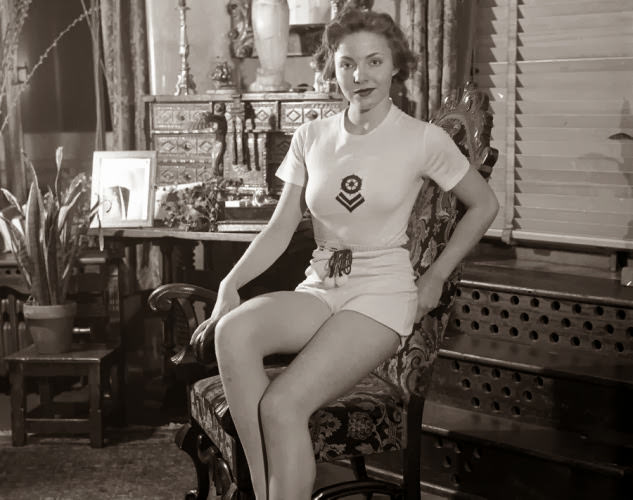
Mardee Hoff sits poised in an ornate chair, her posture relaxed yet carefully composed for the camera, wearing a fitted T‑shirt with a bold emblem and high-waisted short shorts tied at the front. The 1935 styling balances athletic ease with studio polish—soft curls, defined lipstick, and a confident gaze that turns a simple outfit into a statement. Mentioned as having the “most perfect figure in America” at the time, she embodies how the era measured glamour through both spectacle and symmetry.
Behind her, the richly decorated interior adds to the story: patterned upholstery, heavy drapes, a carved chest with gleaming hardware, and a mix of vases and framed items that suggest taste and prosperity. The setting feels intentionally domestic rather than runway-like, a reminder that early model photography often borrowed the language of the parlor and the sitting room. Light and shadow fall gently across the scene, giving the portrait a warm, lived-in texture while keeping attention on Hoff’s streamlined silhouette.
Seen today, the image offers more than a pin-up moment—it’s a window into 1930s fashion culture, when modern sportswear and body-conscious cuts were becoming part of mainstream style. Short shorts and a snug top hint at changing attitudes toward women’s leisure, fitness, and public display, even as the overall mood remains refined and controlled. For readers interested in vintage fashion, classic modeling, and the visual history of beauty ideals, this portrait captures the careful interplay between trend, marketing, and aspiration in the mid-1930s.