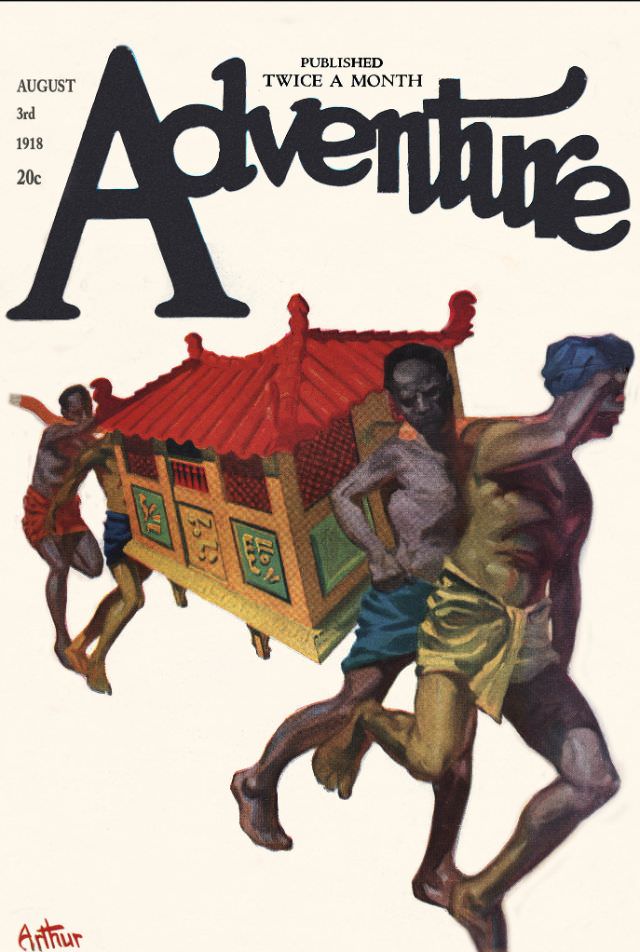
Bold, oversized lettering for “Adventure” crowns the cover dated August 3, 1918, with a small note that the magazine was “published twice a month” and priced at 20 cents. Beneath the masthead, the artwork bursts into motion: a group of figures run in unison, their bodies angled forward with urgency, carrying a red-roofed structure that resembles a small house or shrine. The stark, pale background keeps attention on the dramatic silhouettes and the vivid, limited palette.
Energy and strain are the real subjects here, conveyed through bent knees, swinging arms, and the implied weight of the load. Painted panels along the building’s side—decorative blocks of color and simple motifs—add a hint of the “faraway” visual language common to early adventure pulp illustration, where speed and peril mattered more than precise geography. The composition reads like a chase scene paused mid-stride, designed to promise readers action before they even turn a page.
For collectors and historians of pulp magazines, this Adventure cover art offers a clear window into how early 20th-century periodicals sold excitement: strong typography, a single high-stakes moment, and a memorable color contrast that would stand out on a newsstand. It’s also a useful reference point for anyone studying magazine design, illustration styles of the 1910s, or the visual storytelling conventions that shaped popular fiction. Whether you’re researching Adventure magazine or browsing for vintage cover art, this issue’s cover remains striking for its momentum and theatrical clarity.