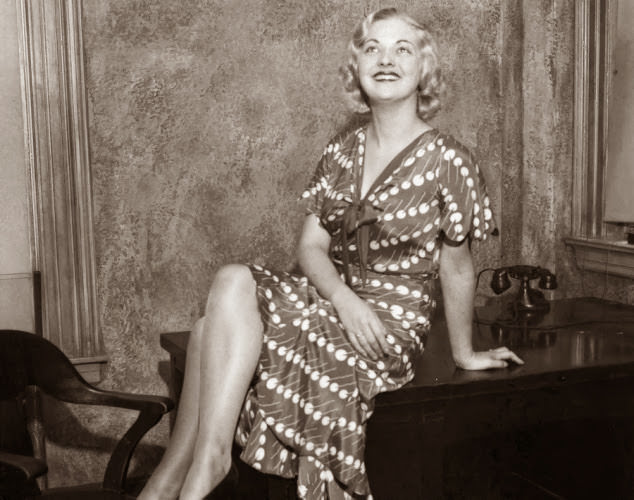
Poised on the edge of a desk with a bright, upward glance, Sandy Goodwin turns a studio moment into a small performance, exactly the kind of playful confidence photographers loved in the early 1930s. Her waved, bobbed hair and luminous smile echo the era’s screen glamour, while the patterned dress—nipped at the waist and softly draped through the skirt—reads as both practical daywear and camera-ready style. Even the sparse office setting, with its plain walls and simple furnishings, throws more attention onto her expression and the easy, rehearsed grace of a working model.
Fashion in 1932 leaned toward sleek lines and fluid movement, and Goodwin’s outfit suggests the period’s fascination with fabric that could skim the body without looking stiff or overbuilt. The print adds lively rhythm across the garment, and the relaxed short sleeves keep the look modern and unpretentious, a reminder that everyday clothing could still carry an unmistakable sense of polish. Details like her crossed legs and casually braced hand show how posing itself had become part of the fashion language—attitude, not just attire.
Notably, the title connects Goodwin to the entrance plaques at Radio City, placing her within the broader visual culture that shaped public spaces as well as magazines. Models of this period weren’t only selling dresses; they were helping define what “modern” looked like in advertising, architecture, and entertainment. For readers exploring 1930s fashion history, this photograph offers a vivid snapshot of the bias-cut era’s elegance, the craft of professional posing, and the lively personality behind the polished image.