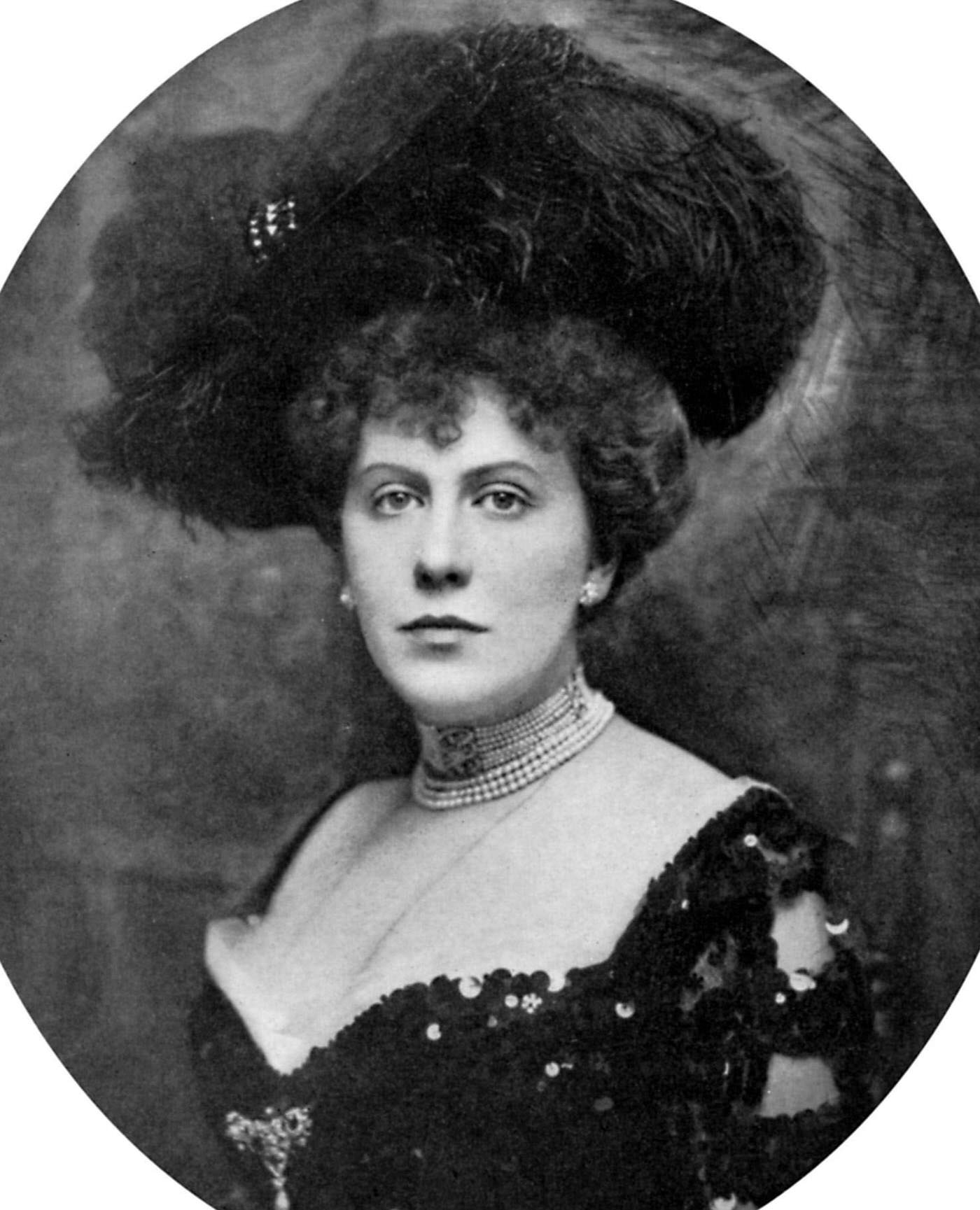
Poised beneath an extravagant Edwardian hat, Alice Keppel meets the camera with a composed, unblinking confidence. The brim rises into a dramatic mass of dark plumes, pinned with a small ornament that catches the light, while her hair is arranged in soft curls that frame a steady gaze. Set against a studio backdrop and cropped in an oval mount, the portrait has the formal polish associated with high society at the start of the 20th century.
Keppel’s dress and jewelry underline the era’s fascination with controlled glamour: a low neckline edged with dark lace and sequined detailing, paired with a close-fitting, multi-strand choker that reads as both fashionable and emphatically modern for its day. Even in monochrome, textures do the work—feather, lace, and satin-like sheen—creating a layered image of wealth and careful presentation. The styling draws attention to the hat in particular, a defining accessory of Edwardian women’s fashion and a potent marker of status in public life.
Remembered as an English socialite and the mistress of King Edward VII, Keppel occupies a complicated space between celebrity, influence, and private scandal, and the portrait trades on that ambiguity. Nothing in her expression performs overt drama; instead, the power lies in restraint, the kind cultivated in drawing rooms and at court. As a piece of fashion and culture history, this 1906 portrait offers a vivid reference for Edwardian portrait photography, women’s hat styles, and the visual language of elite society in the years just before the world began to change.