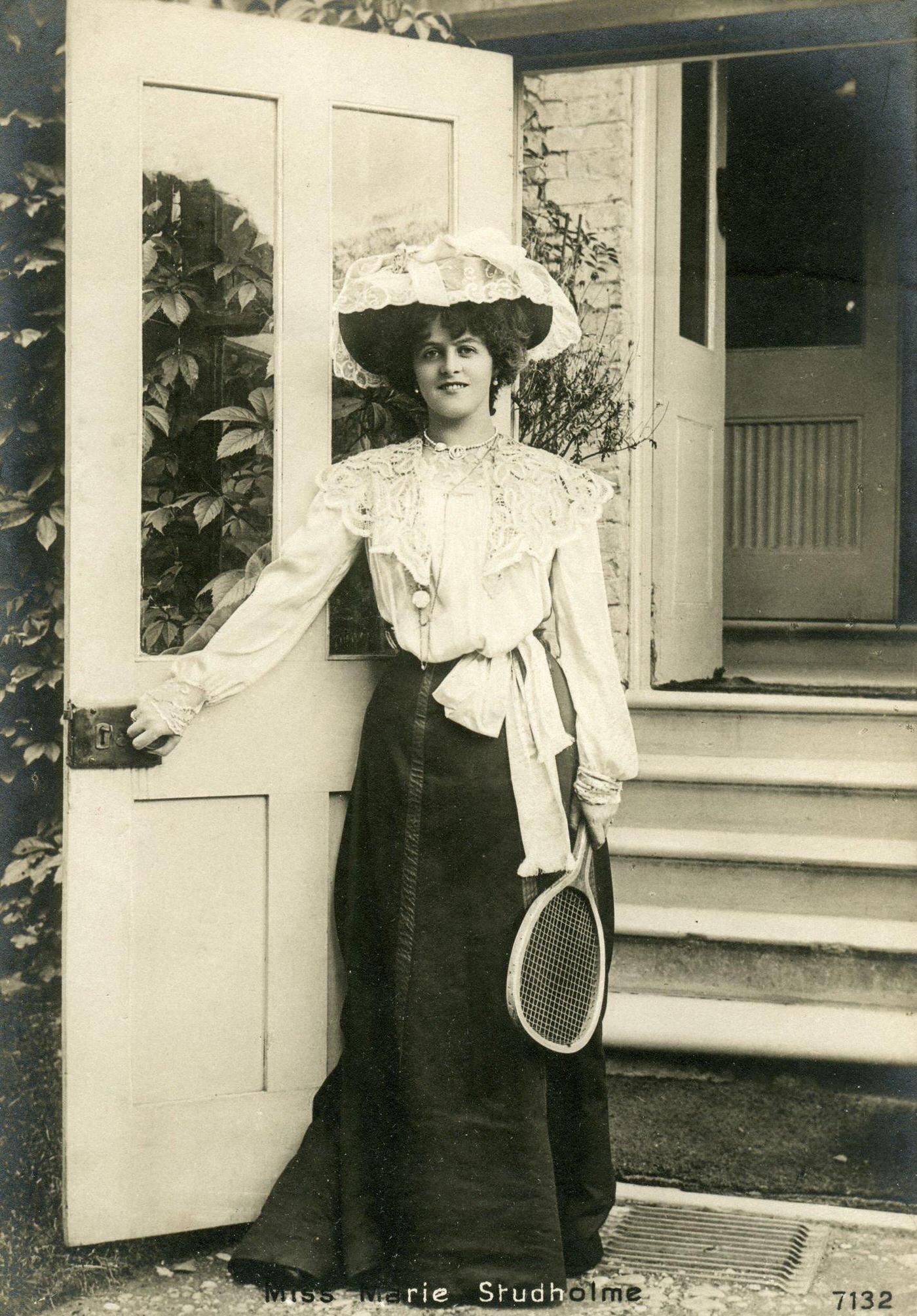
Framed by an open garden door, Marie Studholme stands with the easy confidence of the early 1900s, her gaze meeting the camera as if inviting the viewer into the scene. Ivy and foliage press close to the doorway, while the house’s brickwork and tall windows create a crisp domestic backdrop that feels both private and carefully staged. A tennis racket hangs at her side, a subtle prop that hints at leisure, modern pastimes, and the social rituals of an Edwardian afternoon.
Fashion takes center stage in the details: a wide-brimmed hat crowned with airy lace, a high-neck blouse softened by layered trims, and long sleeves gathered at the wrists in ruffles. The dark, floor-length skirt falls in a clean column, cinched with a sash that emphasizes the era’s shifting silhouette—less rigid than Victorian lines, yet still formal and meticulously arranged. Jewelry glints at the throat and along the bodice, offering a restrained sparkle that complements the overall elegance rather than competing with it.
Even without a named setting, the portrait reads as a small document of culture as much as style, balancing outdoor freshness with the controlled poise of studio-era posing. The open door suggests movement between public and private spaces, while the tennis racket signals the growing visibility of women’s recreation and sporty fashions in the early twentieth century. For anyone searching Edwardian women’s hats, early 1900s portrait photography, or Marie Studholme’s period style, this image distills an era in lace, posture, and quiet self-assurance.