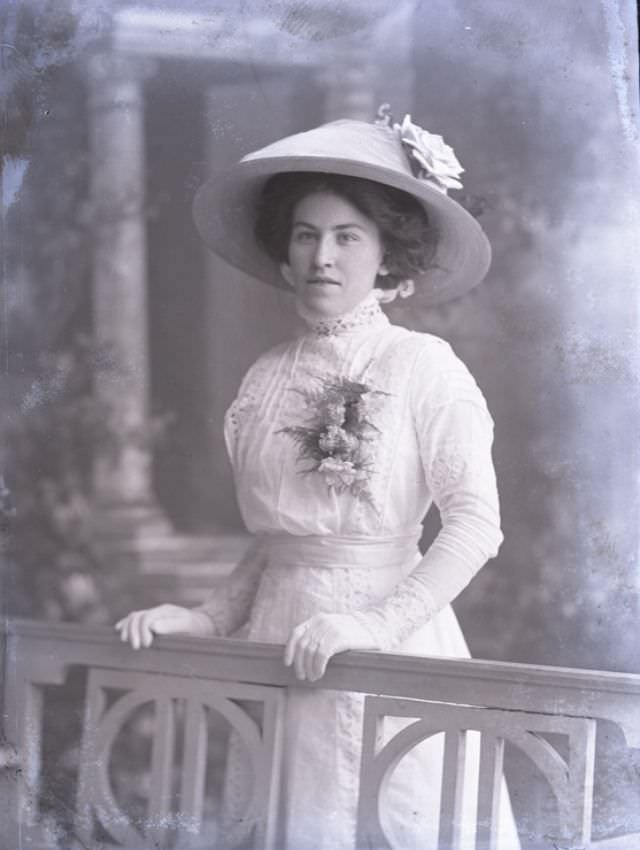
Miss Searle stands poised behind a decorative balustrade, her gloved hands resting lightly as she faces the camera with an unforced, steady gaze. A broad-brimmed Edwardian hat—trimmed with a prominent floral accent—frames her dark, carefully arranged hair, creating the kind of silhouette that defined women’s fashion in the early 1910s. The soft-focus studio backdrop, with its suggestion of columns and garden scenery, lends the portrait a refined, almost theatrical calm.
Her high-necked dress reads as a showcase of period craftsmanship: light fabric, delicate lacework, and a structured bodice typical of the late Edwardian transition toward slimmer lines. A spray of flowers pinned at the chest echoes the hat’s decoration, tying the ensemble together as both tasteful and intentional, while the long sleeves and fitted waist emphasize modesty and polish. Even without bold jewelry or heavy ornament, the styling communicates social respectability and the era’s preference for controlled elegance.
Dated October 7, 1911, the portrait sits neatly within a moment when women’s hats were more than accessories—they were public statements of modernity, refinement, and the rituals of dressing. Studio portraiture like this balanced intimacy and presentation, preserving not only a likeness but also the textures of everyday aspiration: clothing, posture, and the composed performance of being photographed. For anyone researching Edwardian fashion, women’s portrait photography, or the culture of early 20th-century style, Miss Searle’s image offers a vivid reference point in fabric, form, and attitude.