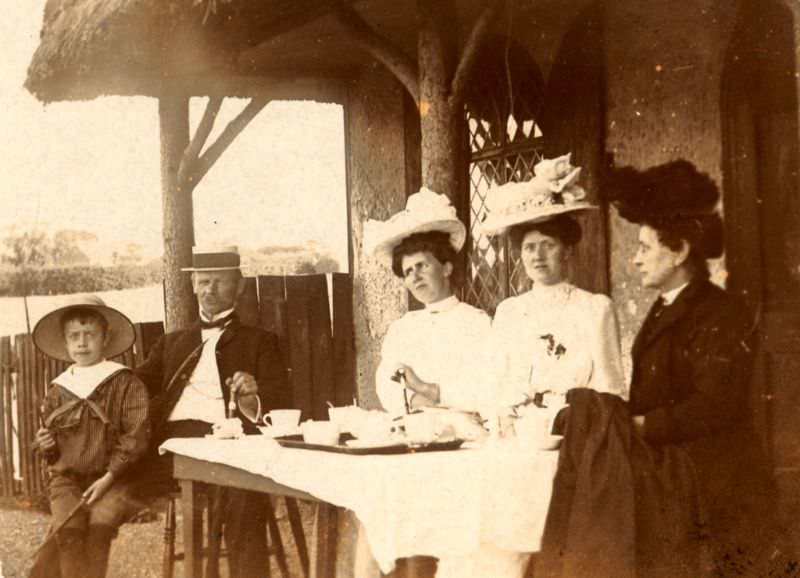
Under a shaded veranda, a small group pauses over tea, their posture relaxed but carefully composed in the manner of early-20th-century leisure. The boy at the edge of the scene wears a broad-brimmed hat that echoes the adult silhouettes nearby, while a seated man in a boater anchors the gathering with understated formality. A tablecloth drapes over the outdoor table, and cups and saucers catch the light, turning a simple refreshment into a social ritual.
The women’s Edwardian hats command immediate attention: tall, brimmed, and lavishly trimmed, they sit above high-necked blouses and tailored bodices that emphasize the era’s refined lines. Decorative elements—suggestive of flowers, ribbons, and possibly feathers—create height and drama, framing faces and signaling both taste and status. In a period when women’s fashion was a public language, millinery was often the most visible statement, balancing practicality for daylight outings with the theatrical flair expected in polite society.
Beyond style, the photograph speaks to the culture that made such hats meaningful—afternoons spent visiting, resting, and being seen, with clothing chosen for the occasion as much as for comfort. The backdrop of fencing and open landscape hints at a semi-rural or resort-like setting, where fresh air and social display could comfortably meet. For readers searching the history of Edwardian era hats for women, this candid yet staged moment illustrates how millinery helped define an era’s femininity, leisure, and social codes.