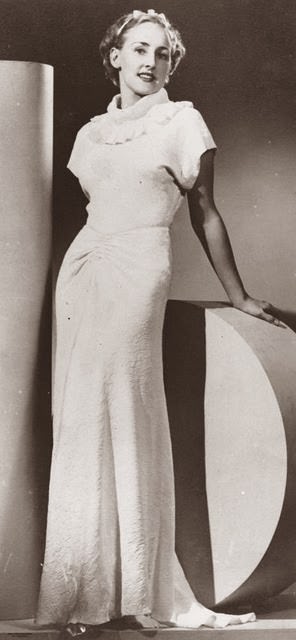
Elegance takes center stage as a poised model leans into a sculptural studio set, wearing a glamorous 1930s evening gown that skims the body in a long, uninterrupted line. The dress reads as light in tone and silky in finish, with a softly ruffled neckline that frames the face and adds a romantic flourish without breaking the streamlined silhouette. Her waved hair and confident stance complete the classic interwar look—polished, modern, and designed to be noticed.
Studio fashion photography of this era loved geometry, and the curved forms behind her act like a theatrical backdrop, amplifying the gown’s smooth drape and the era’s fascination with sleek glamour. The fitted waist and floor-length fall point to the decade’s shift away from earlier, looser shapes toward a more sculpted, bias-inspired style, even when the fabric remains modest and refined. Details are kept deliberate: a clean sleeve, a careful neckline, and a surface texture that catches light just enough to suggest luxury.
For readers interested in 1930s fashion history—especially the world of eveningwear—this portrait offers a vivid reference for how designers and photographers sold sophistication in a changing decade. It also pairs beautifully with the story hinted at in the post’s theme, moving from coastal leisure to ballroom polish, where the same desire for modern style played out under very different lights. As a piece of fashion and culture, the photograph preserves not just a gown, but an attitude: composed, aspirational, and unmistakably of its time.