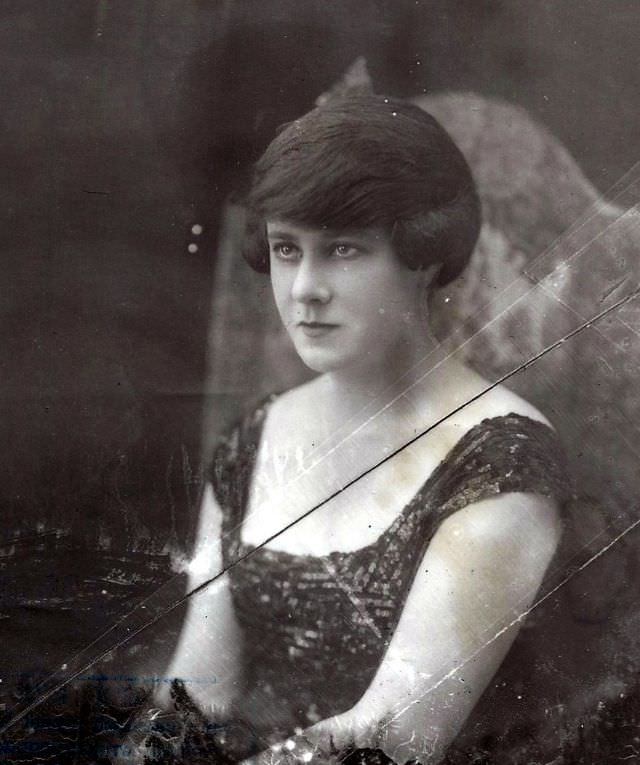
Soft studio light falls across a young woman’s face as she turns slightly away from the camera, her gaze steady and self-possessed. The close-cropped bob—so closely associated with 1920s modernity—frames her features with a deliberate neatness, while the blurred backdrop and upholstered chair create an intimate, carefully staged setting. Fine scratches and age marks on the print add a tactile reminder of how often such portraits were handled, kept, and revisited.
Her evening dress, dark and shimmering with a lace-like texture, speaks to the era’s changing ideas of glamour and freedom. The wide neckline and sleeveless cut draw attention to the shoulders and collarbone, a fashion statement that would have felt boldly contemporary in its day. Small details—like the precise wave of the hair and the composed posture—place the portrait firmly within the flapper aesthetic that shaped women’s fashion and culture in 1920s Melbourne.
Beyond its surface elegance, the image functions as a window into a city embracing jazz-age confidence, new leisure habits, and shifting social expectations. Studio portraiture offered women a stage on which to present themselves as modern, stylish, and in control of their public image. For anyone exploring Australian fashion history, Melbourne social life, or the visual culture of the Roaring Twenties, this portrait distills the period’s mix of poise, experimentation, and quiet defiance.