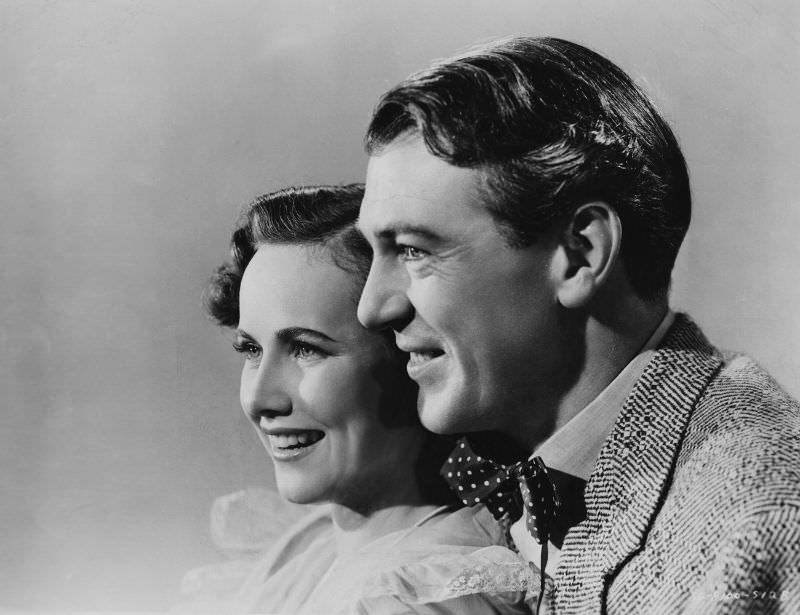
A close-profile studio portrait pairs Gary Cooper with Teresa Wright, their faces turned toward the same off-camera point as if listening for applause beyond the frame. The soft lighting and smooth tonal range give the shot a polished, classic Hollywood feel, while Cooper’s textured jacket and bow tie suggest the carefully constructed “everyman hero” persona the era prized. It’s an intimate kind of publicity image—less about action, more about mood and character.
Released in 1942, *The Pride of the Yankees* helped translate Lou Gehrig’s baseball legend into a screen story built on humility, perseverance, and public grace. The photograph echoes that approach: smiles held in check, eyes bright, the sense of optimism slightly tempered by what audiences already knew lay ahead. For anyone searching for “The Pride of the Yankees 1942” or “Gary Cooper Lou Gehrig film,” this still offers a revealing glimpse of how the movie sold its emotional center.
Hollywood biographies often walk a line between fact and fable, and part of their power comes from images like this—carefully staged, warmly human, and instantly memorable. Cooper’s calm assurance beside Wright’s open expression underscores the film’s emphasis on partnership and home-front steadiness as much as sports achievement. As a piece of classic Movies & TV history, it stands as a reminder of how one performance shaped the popular memory of an American athlete.