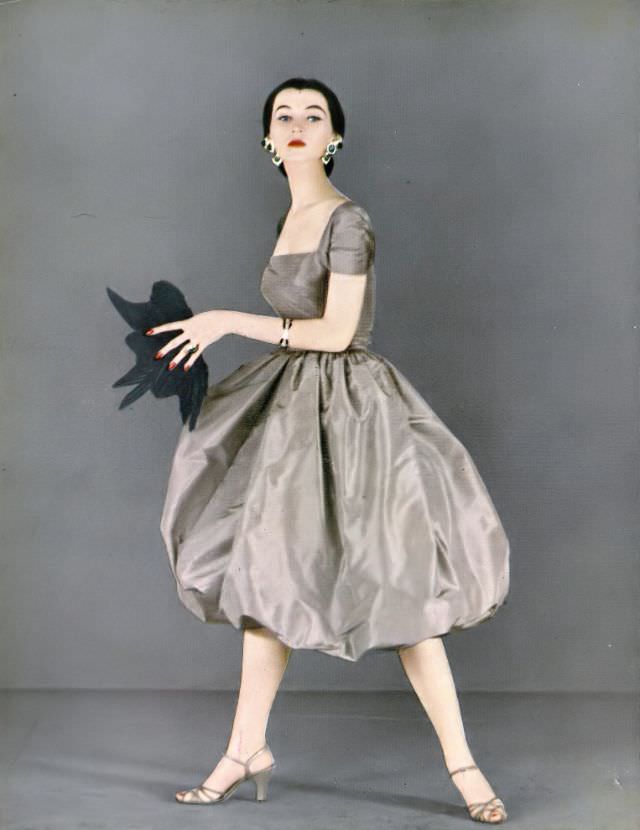
Poised mid-stride against a plain studio backdrop, Dovima turns her head with the cool assurance that made her a defining face of postwar fashion photography. The bouffant silk taffeta skirt swells outward in a sculptural dome, catching light in soft, metallic ripples, while the separate square-cut taffeta top keeps the silhouette crisp through the shoulders and neckline. A restrained palette and clean set design push every eye toward proportion, fabric, and posture—an editorial language perfected on the pages of Harper’s Bazaar.
Details sharpen the story of American elegance in the early 1950s: Coro earrings glint at the ears, and a Hattie Carnegie fan rests in her hand like a theatrical prop, adding motion even in stillness. Her red lipstick and manicured nails punctuate the look with controlled glamour, balanced by the simplicity of strappy heels and a bare, uncluttered setting. The overall effect is not just “dressy,” but architectural—taffeta treated as a medium for volume, air, and attitude.
Published in Harper’s Bazaar in February 1951, the image also reads as a quiet testament to Mollie Parnis and the era’s appetite for polished, wearable couture on American terms. The separated bodice and skirt suggest versatility and modernity, while the generous skirt signals celebration after years of wartime restraint. For fashion and culture historians—and for anyone searching classic Dovima editorial style—this photograph distills mid-century sophistication into a single, unforgettable pose.