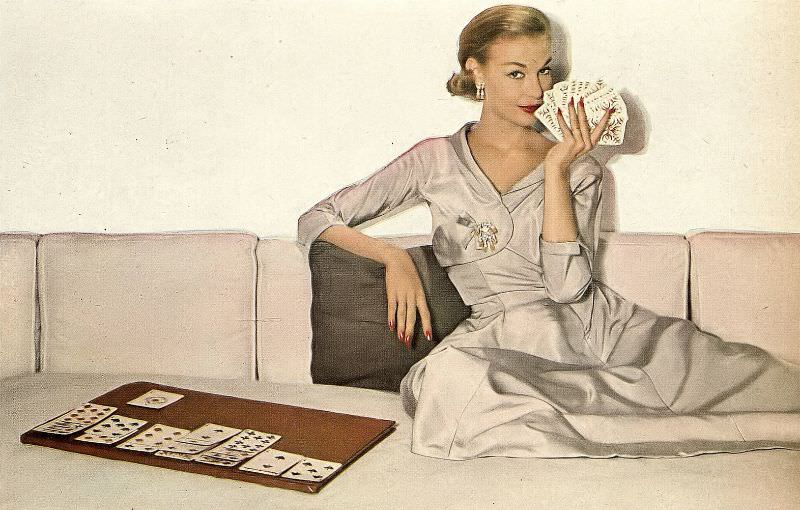
Reclining along a pale sofa, Liz Pringle turns an evening look into a small drama of leisure and poise, lifting a fan of playing cards toward her face as if sharing a private joke with the viewer. The setting is spare—cream upholstery, a low table, and scattered cards—so the eye returns again and again to the soft luster of her pale silk dinner dress and the controlled elegance of her pose.
Mollie Parnis’s design reads as mid-century refinement: a gently structured bodice, a wrapped neckline, and a skirt that pools in calm, architectural folds. A small matching jacket adds a tailored note over the sheen of silk, while a decorative accent at the waist and understated jewelry underscore the polished, cocktail-hour mood associated with Harper’s Bazaar’s fashion pages. Even the manicure and carefully arranged hair echo the era’s emphasis on immaculate finishing.
Printed for Harper’s Bazaar in October 1952, the image balances glamour with a knowing sense of play, using the language of card games to suggest sophistication without effort. It’s a glimpse of postwar fashion culture in which American designers like Parnis defined luxury through impeccable cut, restrained color, and tactile fabrics rather than excess. For readers then and vintage-fashion lovers now, the photograph sells more than a dress—it sells an attitude of serene confidence in a beautifully made life.