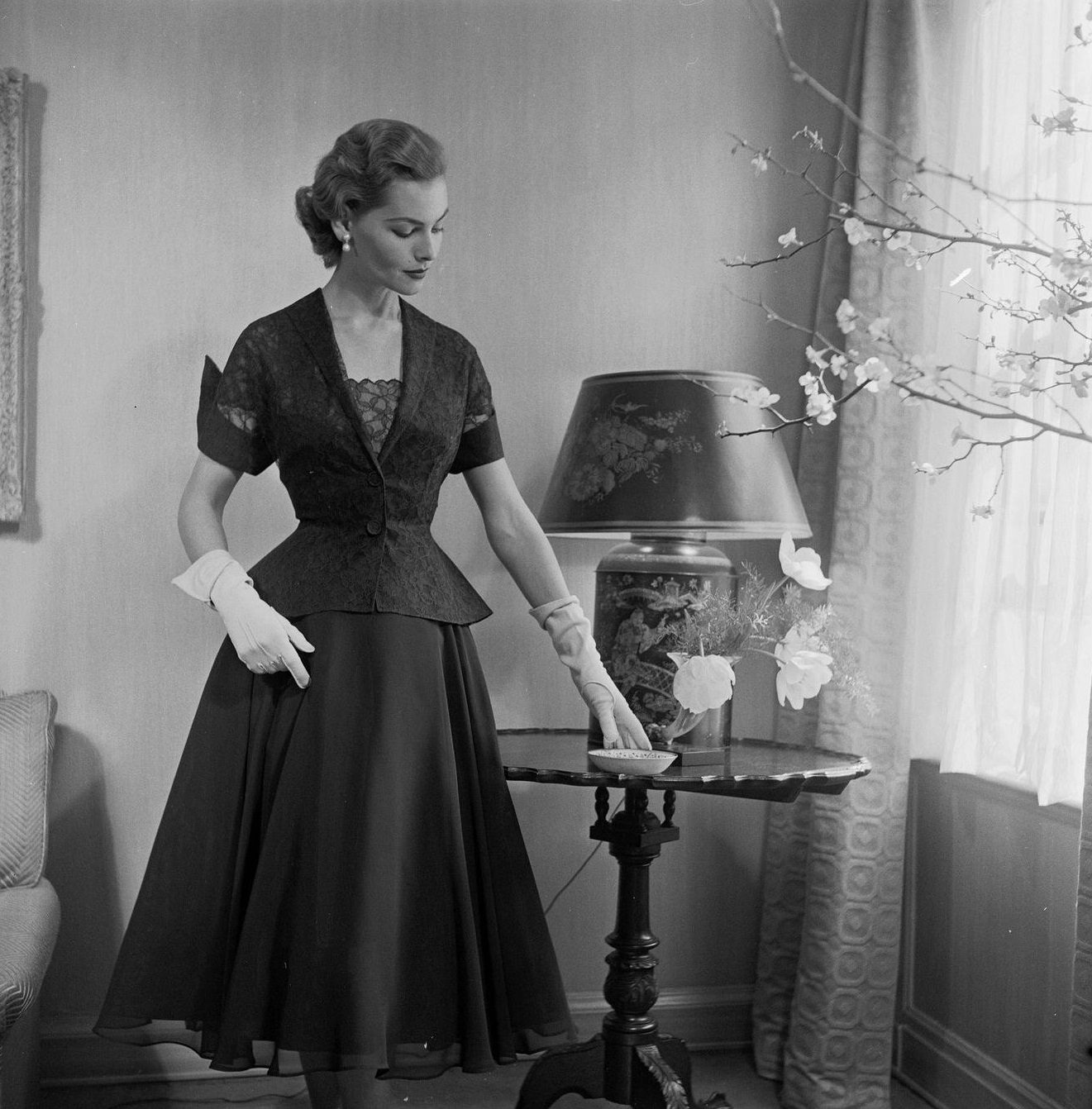
Poised beside a small pedestal table, Georgia Hamilton models a DuBerry dress with the quiet assurance of mid-century elegance. A fitted, buttoned jacket with lace at the neckline shapes the waist into a soft peplum, while a full, flowing skirt falls in a clean arc toward the floor. Pearl earrings, a neat wave of coiffed hair, and light-colored gloves complete a look designed to read as refined rather than flashy.
The interior setting is staged like a tasteful sitting room: a patterned sofa at the edge of the frame, a painted lamp base and shade, and a delicate vase arrangement that echoes the model’s gentle, downward gaze. Daylight pours through a curtained window, giving the fabric subtle sheen and making the dress’s textures—lace, smooth skirt, and structured bodice—stand out in crisp contrast. Even the small dish on the tabletop and the careful placement of flowers suggest a world where presentation and etiquette mattered.
Fashion photography of this kind was as much about lifestyle as clothing, selling an ideal of composure and domestic polish along with a designer name. DuBerry’s design, paired with Hamilton’s restrained pose, communicates an occasion-ready ensemble suited to cocktail hours, formal visits, or an evening out without excess ornament. For historians of style and culture, the image reads as a snapshot of glamour made practical: couture-inspired lines, impeccable accessories, and a room arranged to flatter every detail.