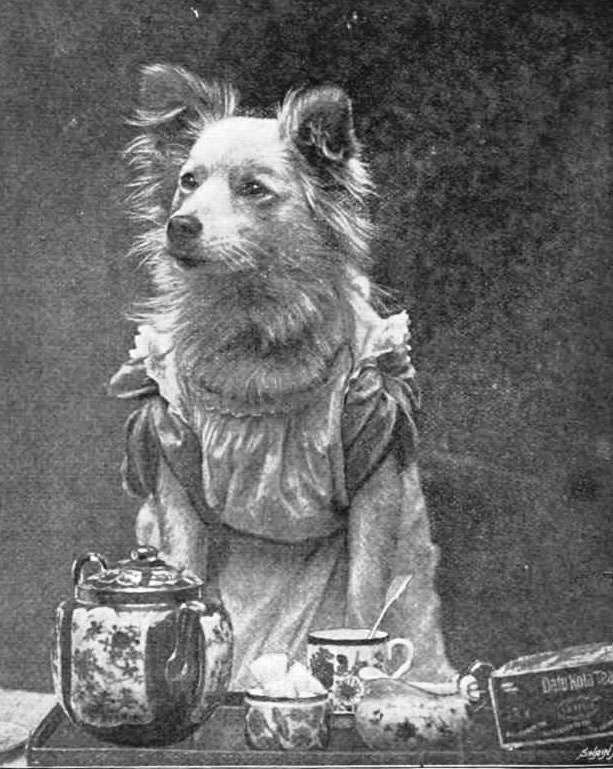
Perched at a tea table in a neatly gathered dress, a small long-haired dog meets the camera with an expression that’s equal parts dignified and unimpressed. The ruffled sleeves and bodice sit awkwardly over fur, creating that delightful late-19th-century contrast between formal costume and unmistakably canine posture. Even without any background detail, the staging feels intentional—more parlor joke than accident.
In the foreground, a decorated teapot and matching cup-and-saucer set underline the “tea time” premise, turning the scene into a miniature social ritual. The dog’s gaze drifts off to the side as if waiting for the next instruction, while the patterned ceramics and tabletop arrangement suggest a carefully composed studio setup. It’s the kind of whimsical tableau that would have been shared for laughs, displayed as a novelty, or kept as a beloved household curiosity.
“Dog in dress for tea time, 1895” offers a charming glimpse into historic humor and the long tradition of dressing pets for entertainment. Beyond the obvious comedy, the image hints at domestic leisure—tea service as a symbol of comfort and respectability, repurposed here for a playful twist. For anyone interested in Victorian-era photography, antique pet portraits, or the history of everyday amusement, this funny little scene has real staying power.