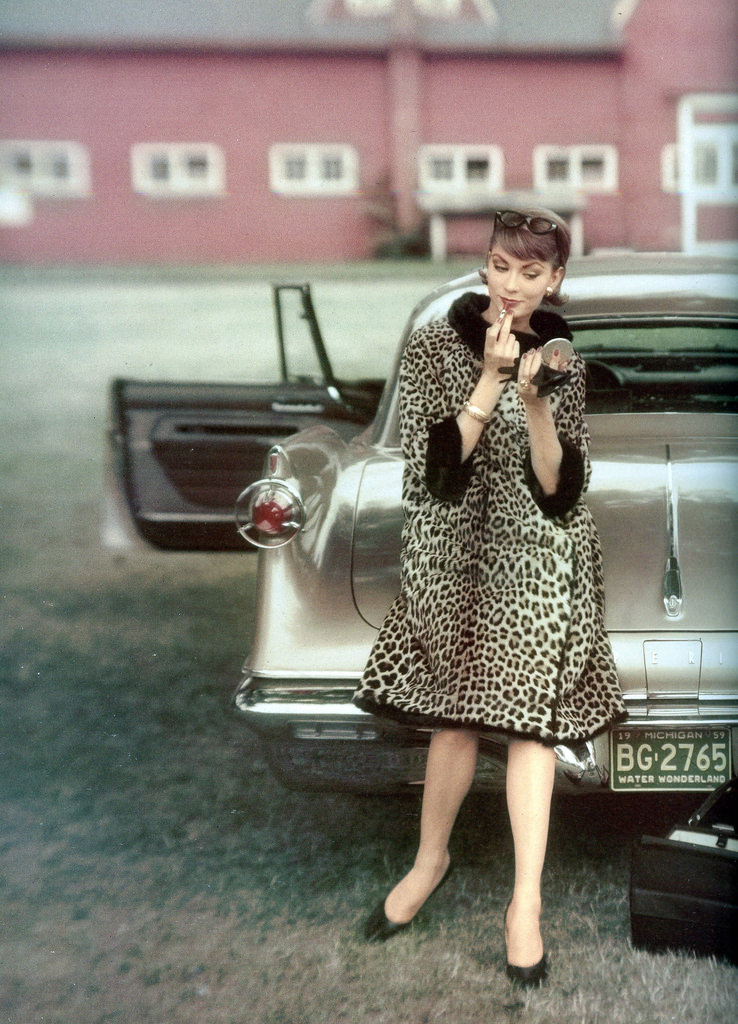
Perched on the rear of a Chrysler Le Baron, Mary McLaughlin pauses mid-journey to touch up her lipstick, compact open in one hand and a knowing expression on her face. The leopard-pattern coat with plush dark trim, slim heels, and cat-eye sunglasses pushed up into her hair read like shorthand for late‑1950s glamour, while the car’s sweeping tail and polished chrome turn the curbside moment into a miniature stage. Even the Michigan license plate—“Water Wonderland”—adds a period detail that anchors the fashion fantasy in everyday American life.
John Rawlings’ Vogue photograph from October 1959 thrives on contrasts: soft elegance against hard metal, private ritual against public display, refined poise beside the optimism of postwar design. The composition lingers on the Le Baron’s sculpted rear and rocket-age styling, letting the automobile function as both prop and co-star. It’s an advertisement without a slogan, selling the idea that modern luxury could be worn, driven, and performed in a single afternoon.
For collectors of vintage Vogue photography and historians of mid-century style, this scene captures how fashion editorials folded cars into the language of aspiration. The coat’s bold pattern and the sedan’s confident lines speak to a culture fascinated by surface, speed, and status—yet the intimate act of applying lipstick keeps it human and relatable. As a slice of 1950s fashion and culture, the image remains a crisp reminder of how chrome, couture, and charisma once traveled together.