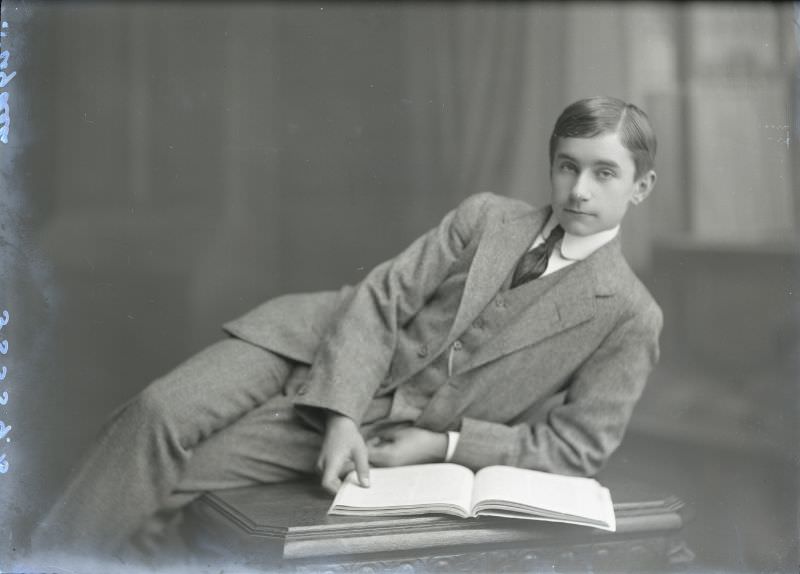
Reclining with easy confidence, a teenage boy poses in a studio setting, his gaze steady as one arm props him up beside an open book. The tailored three-piece suit—jacket, waistcoat, and neatly pressed trousers—signals the Edwardian taste for clean lines and controlled elegance, even in youthful wardrobes. A high, crisp collar and carefully knotted tie complete the look, turning a simple portrait into a statement about manners, modernity, and aspiration.
What stands out in this Edwardian-era fashion moment is the balance between boyishness and adulthood: the haircut is tidy and close, the face still youthful, yet the clothing borrows heavily from men’s formalwear. The wool suit fabric reads as practical and durable, while the structured shoulders and fitted waistcoat suggest an attention to silhouette that was central to early 20th-century style. The open book, placed prominently in the composition, hints at education and refinement—common visual shorthand in period photography for respectability and ambition.
For anyone researching vintage menswear, teen boys’ suits, or Edwardian fashion culture, this image offers a clear view of how “dapper” was defined beyond hats and canes: it lived in tailoring, posture, and polish. Studio portraits like this were often designed to present the sitter at their best, reinforcing social expectations about class presentation and the transition from schoolboy to young gentleman. In a single frame, the era’s ideals—discipline, decorum, and a measured sense of style—feel remarkably close.